

Key Takeaways
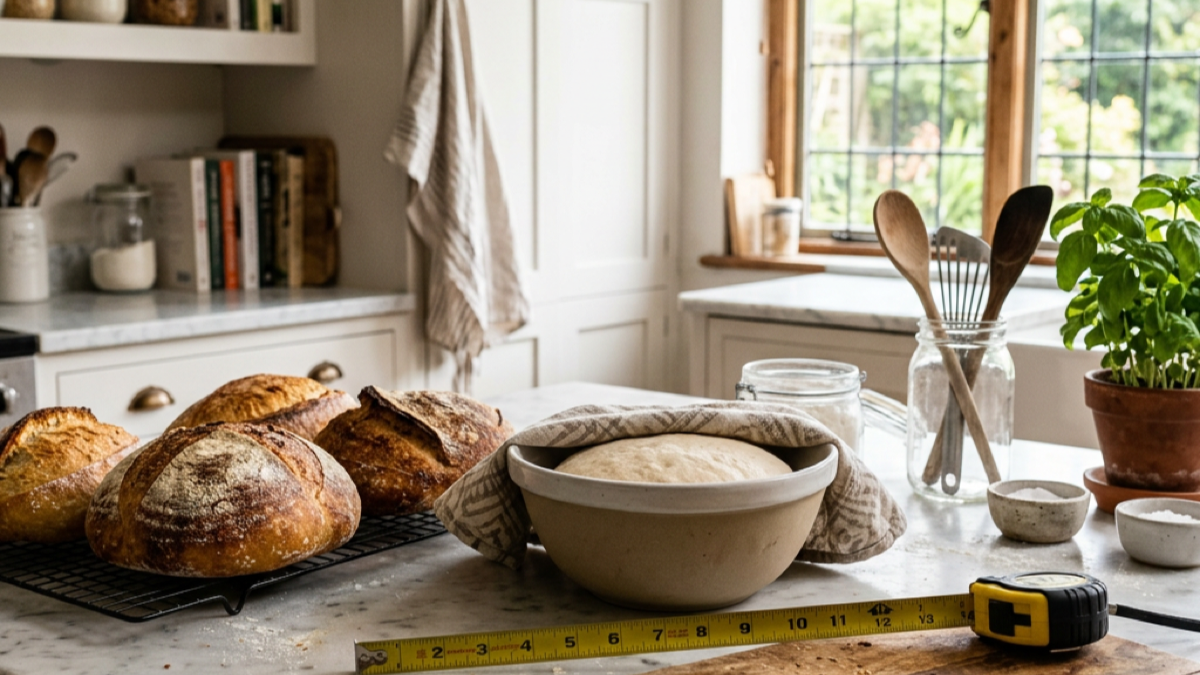
- The quart number on the box is NOT your usable capacity — especially for bread dough. A "5-quart" mixer typically handles about 3.5-4 quarts of actual ingredients before things get messy. For stiff dough (bagels, pretzels), usable flour capacity drops by 40% compared to cake batter. The number that matters is grams of flour at your typical hydration level, not the quart rating.
- A 5-quart tilt-head mixer is the right answer for about 80% of home bakers. It handles 9 dozen cookies or a single loaf of bread comfortably, fits under standard kitchen cabinets (14" height), and weighs ~25 lbs — light enough to move between counter and cabinet. If you bake bread weekly, step up to a 6-quart bowl-lift with a DC motor.
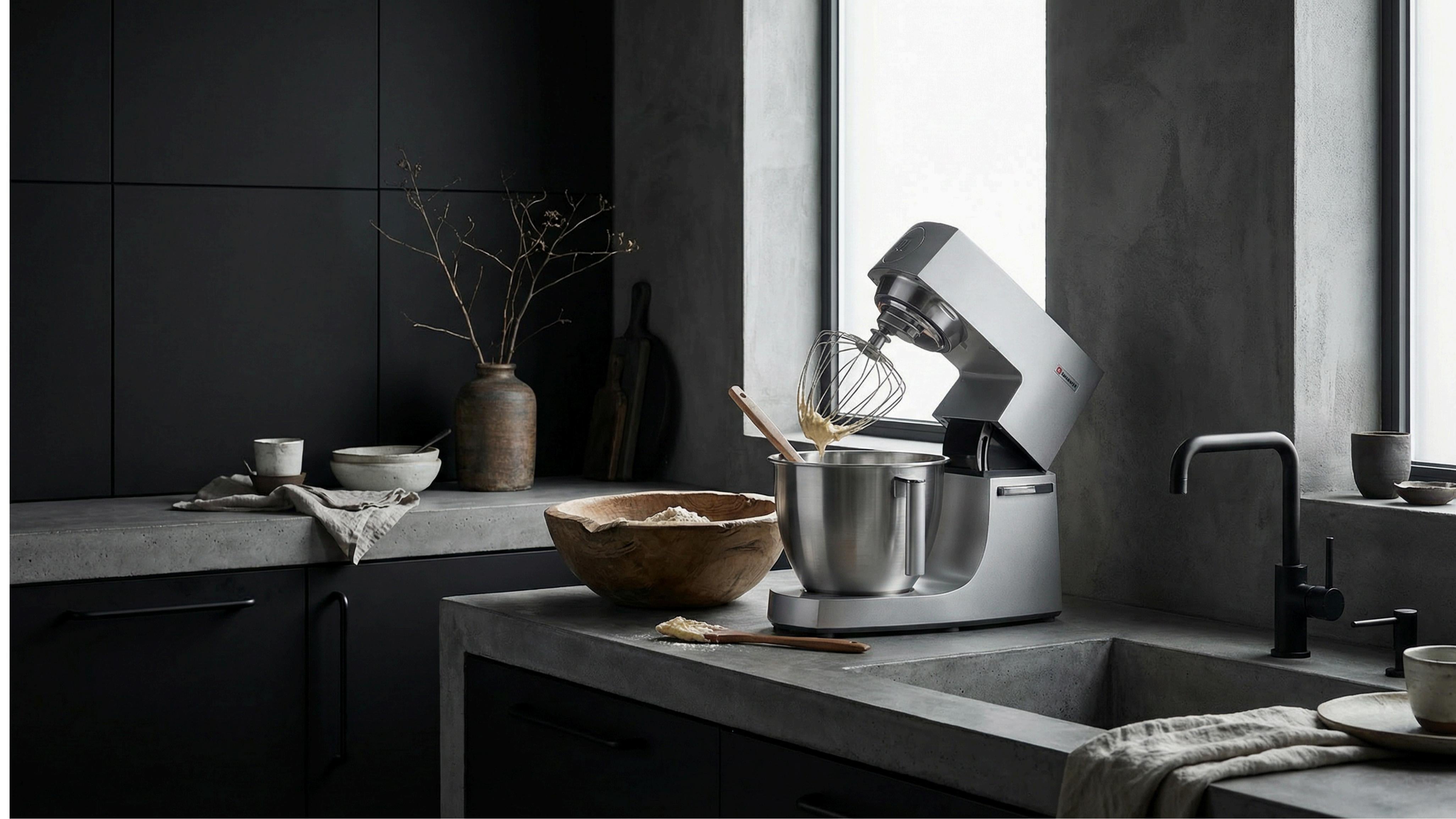
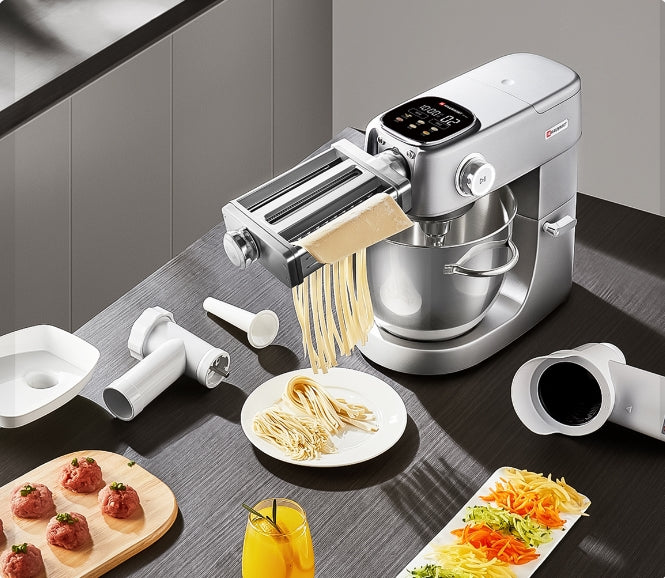
- Motor type changes your usable bowl size — and almost no buying guide mentions this. A DC motor delivers full torque at Speed 1, letting you use closer to the bowl's rated capacity on stiff dough without stalling. An AC motor loses 30-40% of its twisting force at low speeds, reducing effective dough capacity by a similar margin. The Hauswirt M5max (500W DC, 6QT, $399.99) handles stiff dough closer to its rated capacity than AC motor mixers at the same bowl size.
- Counter height is the dealbreaker nobody talks about. Standard upper kitchen cabinets sit 18 inches above the counter. A bowl-lift mixer stands 16-17 inches tall and needs another 2+ inches of clearance to add ingredients — it physically won't fit under most cabinets. A tilt-head mixer (13-14 inches) does. Measure before you buy.
- If you bought the wrong size, there are workarounds — but some sizes have hard limits you can't fix. A too-small mixer (3.5QT) can batch-cook with more cleanup but will never handle a full bread recipe. A too-large mixer (7-8QT) struggles with small batches because the paddle can't reach the ingredients at the bottom of the bowl. The 5-6QT range is forgiving in both directions.
You're standing in the kitchen appliance aisle — or more likely, scrolling Amazon at 10 p.m. — staring at stand mixer specs. 3.5 quarts. 5 quarts. 6 quarts. 7 quarts. Tilt-head. Bowl-lift. 250 watts. 500 watts. DC motor. AC motor.
None of these numbers tell you what you actually want to know: Can this mixer handle my bread recipe? Will it fit under my cabinets? Am I going to regret buying the small one in six months?
Most size guides answer these questions with "a 5-quart mixer makes 9 dozen cookies." That's not helpful. You don't need to know how many cookies a mixer can theoretically churn through. You need to know whether your weekly sourdough is going to burn out the motor or walk the machine off your counter.
This guide answers those questions — with actual flour weights, hydration levels, counter measurements, and the motor spec that changes everything.
The Quart Number Is Overstated — Here's What Actually Fits
A stand mixer's stated bowl capacity is a geometric volume — how much water would fill the bowl to the brim. But you don't fill a mixer to the brim. Ingredients need room to move. The paddle or dough hook needs clearance to turn. And stiff dough generates resistance that effectively reduces how much the bowl can hold before the motor struggles.
Here's what usable capacity actually looks like:
| Stated Bowl Size | Usable — Batters & Whipped Cream | Usable — Soft Dough (pizza, focaccia, 70%+ hydration) | Usable — Stiff Dough (bagels, pretzels, 55-60% hydration) |
|---|---|---|---|
| 3.5 QT | ~2.5 QT (1 batch cookies) | ~300g flour max | Not recommended — motor strain |
| 4.5-5 QT | ~3.5-4 QT (double batch cookies) | ~500g flour max | ~350g flour max (light/vibrating) |
| 5.5-6 QT | ~4.5-5 QT | ~750g flour max | ~500-600g flour max |
| 7-8 QT | ~6-6.5 QT | ~1000g+ flour max | ~800g flour max |
The drop from batters to stiff dough is dramatic. A 5-quart mixer that handles a double batch of cookie dough with room to spare will struggle with 350 grams of bagel dough — about two bagels' worth. That's not a defect. It's the physics of kneading low-hydration dough. The motor has to push a hook through material that's fighting back, and the resistance multiplies the effective load on every component.
This is also why the hydration level of your typical recipe should determine your size choice more than how many people you cook for. If you mostly make wet doughs — ciabatta, focaccia, pizza — you can get away with a smaller bowl. If you make bagels, whole wheat sandwich bread, or stiff pasta dough, you need to size up or accept smaller batches.
How Much Flour Can Your Mixer Actually Handle?
Here's the table that no competitor guide includes: flour capacity in grams, broken down by hydration level and bowl size. If you know your go-to recipe's flour weight and hydration, you can find your minimum bowl size directly.
| Bowl Size | 50-58% Hydration (bagels, pretzels, pasta) |
60-65% Hydration (sandwich bread, challah, rolls) |
66-72% Hydration (pizza, French bread) |
73-80% Hydration (ciabatta, focaccia) |
|---|---|---|---|---|
| 3.5 QT | Not recommended | ~250g (1 small loaf) | ~300g | ~350g |
| 4.5-5 QT | ~350g (2-3 bagels) | ~500g (1 standard loaf) | ~650g | ~750g |
| 5.5-6 QT | ~550g | ~750g (2 standard loaves) | ~900g | ~1,050g |
| 7-8 QT | ~800g | ~1,200g (3-4 loaves) | ~1,400g | ~1,600g |
These numbers assume a mixer with sufficient motor power. A 5-quart mixer with a weak AC motor won't hit the 500g mark on sandwich bread — the motor will stall before the bowl runs out of space. Which brings us to the spec that changes everything.
AC vs DC: Why Motor Type Changes Your Usable Bowl Size
Every stand mixer buying guide talks about bowl size and wattage. Almost none of them mention motor type — and it's the single biggest factor in whether your mixer can actually use the full capacity of its bowl on stiff dough.
AC motors (used in KitchenAid Artisan, Cuisinart SM-50, Hamilton Beach, and most budget mixers) are cheap to manufacture and reliable for light-to-medium use. But they have a baked-in physics problem: torque drops at low speeds. An AC motor needs RPMs to generate twisting force. Kneading bread dough happens at Speed 1-2 — exactly where AC motors are weakest.
This means an AC motor mixer rated for 5 quarts and 325 watts might only deliver 60-70% of its rated torque at bread-kneading speed. The motor strains, heats up, and may stall — not because the bowl is too full, but because the motor can't push the hook through the dough at low RPM.
DC motors use permanent magnets instead of electrical brushes. They deliver full torque from Speed 1. A 500W DC motor — like the one in the Hauswirt M5max — will outperform a 575W AC motor on stiff dough because it converts electricity into rotational force more efficiently at every speed, but especially at the low speeds where bread dough happens.
Here's what this means for capacity:
| Scenario | AC Motor (325W, 5QT) | DC Motor (500W, 6QT) |
|---|---|---|
| Cookie dough / cake batter | Full 5QT usable — low resistance | Full 6QT usable — low resistance |
| 70% hydration pizza dough (1kg flour) | Struggles — motor labors, mixer may walk | Handles cleanly at Speed 1-2 |
| 60% hydration sandwich bread (750g flour) | Stalls or overheats — beyond practical limit | Handles at Speed 2, moderate load |
| 55% hydration bagel dough (500g flour) | Not recommended — motor damage risk | Handles at Speed 1-2, heavy but stable |
| Noise at kneading speed | 75-85 dB (vacuum cleaner level) | 45 dB (library quiet) |
The practical takeaway: if you bake bread more than once a month, a DC motor effectively gives you one size tier more usable capacity — a 6QT DC mixer handles dough volumes that would need a 7-8QT AC mixer to manage comfortably. For a deeper breakdown of how these motor types compare head-to-head, our Hauswirt vs KitchenAid comparison covers it with actual lab measurements.
The M5max is one of the few mixers under $500 that ships with a DC motor. At $399.99 for 500W DC in a 6QT bowl, it hits a price-to-motor-tech ratio that didn't exist in the stand mixer market five years ago. If you want a full-size bowl that can handle weekly bread dough and you don't want to pay KitchenAid Pro Line money ($700+), this is where the value is.
Will It Fit Under Your Cabinets? The Measurement Nobody Mentions
Standard upper kitchen cabinets in the US are installed 18 inches above the countertop. This number — 18 inches — should be on every stand mixer product page. It almost never is.
| Mixer Type | Typical Height | Fits Under 18" Cabinets? | Note |
|---|---|---|---|
| 3.5 QT Tilt-Head | ~13 inches | Yes — with room to tilt | Smallest footprint overall |
| 4.5-5 QT Tilt-Head | ~14 inches | Yes — tilting head stays under 18" | Most popular for a reason |
| 5.5-6 QT Bowl-Lift | ~16.5 inches | No — needs ~19" to add ingredients | Must live on open counter or cart |
| 7-8 QT Bowl-Lift | ~17 inches | No — needs ~20" clearance | Dedicated counter space required |
The tilt-head vs. bowl-lift decision isn't just about mixing performance. For a lot of home bakers, it's a storage decision disguised as a mixing decision. A tilt-head mixer can be stored in a cabinet and pulled out when you bake. A bowl-lift mixer — at 29-32 pounds — is heavy enough that moving it between cabinet and counter is genuinely annoying. Most people who buy bowl-lift mixers leave them on the counter permanently.
If you have the counter space and you plan to leave it out, the bowl-lift's height doesn't matter. If you need to store your mixer between uses, the tilt-head is the only practical option — and the 5QT size is the largest one that still fits under cabinets.
Also consider weight. A 5QT tilt-head (Hauswirt M5max, 6QT but tilt-head-style form factor) weighs around 18-20 lbs — liftable with one hand from a low cabinet. A KitchenAid Pro 600 bowl-lift weighs 29 lbs. A Pro Line 7QT weighs 32 lbs. If you have to crouch down, reach into a base cabinet, and lift 30+ pounds over a cabinet lip, you will use the mixer less. Weight matters for daily usability.
Size Recommendations by Baker Type
| You Are... | Recommended Size | Why |
|---|---|---|
| Occasional baker (1-2x/month, cookies/cakes) | 3.5-4.5 QT | Small batches, light dough only. Fits anywhere. Don't buy this if you ever want to make bread. |
| Regular home baker (weekly, cookies + occasional bread) | 5 QT Tilt-Head | Handles 95% of home recipes. Fits under cabinets. The Goldilocks size — and the most popular for a reason. |
| Weekly bread baker | 6 QT with DC Motor | You need the motor torque more than the extra quart. DC motor at 6QT handles stiffer dough than AC at 7QT. |
| Holiday baker / large family (4+ people, batch cooking) | 6-7 QT Bowl-Lift | Double and triple batches without stopping. Dedicated counter space required. |
| Serious bread baker (bagels, whole wheat, sourdough, weekly double batches) | 7-8 QT Bowl-Lift with DC Motor | The only mixers designed for continuous heavy dough work. Expect to pay $500+ and dedicate permanent counter space. |
Bought the Wrong Size? Here's What to Do
If your mixer is too small (3.5-4.5QT)
What you can work around: Cookie batches, cake batter, whipped cream — small mixers handle these fine. You can make a double batch of cookies by doing two single batches. It's more cleanup but the mixer itself isn't the bottleneck.
What you can't work around: Bread dough. A 3.5QT mixer physically cannot hold enough flour for a standard loaf of sandwich bread (500g flour at 65% hydration produces about 825g of dough — past the usable capacity). The motor isn't designed for the resistance. Trying to knead bread dough in a mini mixer will overheat the motor, strip the gears, or both.
The fix: If you only bake bread occasionally, keep the small mixer for everything else and knead bread dough by hand or with a bread machine. If you want to bake bread regularly, sell the small mixer and move up to 5QT minimum. Used KitchenAid Minis hold their value reasonably well on Facebook Marketplace.
If your mixer is too large (7-8QT)
The problem nobody warns you about: Big bowls don't work well for small batches. The paddle and whisk attachments need a minimum amount of material in the bowl to make contact — typically 1-2 cups of ingredients. If you're making a single batch of whipped cream (1 cup heavy cream), a 7QT bowl is too wide and shallow for the whisk to reach effectively. You'll be scraping the sides constantly.
The fix: Some 7QT bowl-lift mixers accept smaller accessory bowls (KitchenAid sells a 3QT combo bowl for their 7QT models). If yours doesn't, the workaround is to double small recipes — even if you don't need double the output. Freeze extra cookie dough. Give away the extra loaf. It's a small inefficiency for the times you need large capacity.
When to sell and rebuy: If the mixer doesn't fit under your cabinets AND you have no open counter space, you're going to resent this machine every time you use it. A 30+ lb mixer that lives in a base cabinet requires a deadlift every time you bake. Most people in this situation end up not baking at all. Sell it, buy a 5-6QT tilt-head that fits your kitchen, and accept the smaller batch size — you'll actually use it.
Choosing Between the Top Brands by Size
| Size Tier | KitchenAid | Hauswirt | Cuisinart | Bosch |
|---|---|---|---|---|
| 3.5-4.5 QT | Artisan Mini (3.5QT, $350, AC) | — | — | — |
| 5 QT | Artisan (5QT, $450, AC, 325W) | M5 (5QT, $249, AC, 300W) | SM-50 (5.5QT, $200, AC, 500W) | — |
| 6 QT | Pro 600 (6QT, $500, AC, 575W) | M5max (6QT, $399, DC, 500W) | — | Universal Plus (6.5QT, $450, 800W) |
| 7+ QT | Pro Line (7QT, $750, DC, 500W) | — | — | — |
The value anomalies jump out: the Cuisinart SM-50 at $200 with a 5.5QT bowl and 500W is the budget pick for occasional bakers who want the largest bowl per dollar. The Hauswirt M5max at $399 with a DC motor and 6QT bowl is the dollar-for-spec leader in the mid-range — it's the cheapest way to get DC motor torque in a full-size mixer. The KitchenAid Pro Line at $750 is the premium end — same DC motor technology as the M5max but in a larger bowl-lift form factor with heavier construction for daily commercial-style use.
For more detail on how these brands compare spec-by-spec, see our complete stand mixer buying guide.
Also read: Hauswirt M5 vs M5max vs M9: Which Model Is Right for You? — see how all three Hauswirt models compare side by side.
Frequently Asked Questions
What size stand mixer do I need for a family of four?
A 5-quart tilt-head mixer handles standard recipes for a family of four — cookies, cakes, mashed potatoes, and occasional bread. You can double most cookie recipes without issues. If your family goes through multiple loaves of homemade bread per week, step up to a 6-quart with a DC motor so you can do double batches of dough without straining.
Is a 5 quart stand mixer big enough for bread dough?
Yes — for standard sandwich bread and pizza dough. A 5-quart mixer handles about 500g of flour at 65% hydration (one standard loaf) comfortably. For stiff doughs like bagels (55% hydration) or whole wheat, you'll max out around 350g of flour. For larger batches or weekly stiff dough, the motor type matters more than the extra quart — a DC motor at 5-6QT will outperform an AC motor at 6-7QT on dough.
Can a 3.5 quart stand mixer handle bread dough?
Not reliably. A 3.5QT bowl holds about 250-300g of flour at dough hydration levels — not enough for a standard loaf. The motor in mini mixers is also not designed for the sustained resistance of kneading. For occasional bread baking, a 3.5QT can handle small pizza or focaccia doughs (under 300g flour, higher hydration). For sandwich bread or bagels, you need at least 5QT.
What's the difference between tilt-head and bowl-lift stand mixers?
Tilt-head mixers (3.5-5QT) have a head that hinges backward to access the bowl — shorter (13-14"), lighter (18-26 lbs), and fit under standard cabinets. Bowl-lift mixers (5-8QT) use a lever to raise the bowl into a stationary head — taller (16-17"), heavier (29-32 lbs), and more stable for heavy dough. Bowl-lift handles stiff dough better. Tilt-head fits in more kitchens. For a full breakdown, read our tilt-head vs bowl-lift comparison.
Will a stand mixer fit under my kitchen cabinets?
Tilt-head mixers (13-14" tall) fit under standard 18" upper cabinets, even with the head tilted back to add ingredients. Bowl-lift mixers (16-17" tall) do not — you need about 19-20" of clearance to add ingredients to a bowl-lift. If your mixer lives on an open counter or kitchen cart, either style works. If you need to slide it under cabinets, tilt-head is your only option.
Does a DC motor really make a difference for home baking?
Yes — but only if you bake bread or stiff dough regularly. DC motors deliver full torque at low speeds, run quieter (45dB vs 75-85dB for AC), and stay cooler during long kneading sessions. For cookies, cakes, and whipped cream, you won't notice the difference between AC and DC. The motor type becomes relevant the moment you're kneading dough at Speed 2 for 8-10 minutes. For more on this, our Hauswirt vs KitchenAid comparison breaks down the AC vs DC difference in detail.
What's the best stand mixer size for the money?
The 5-6QT tier offers the best value — it handles virtually all home baking tasks and there are strong options from $200 (Cuisinart SM-50, 5.5QT, AC) to $400 (Hauswirt M5max, 6QT, DC). Below 5QT, you save money but sacrifice bread capability. Above 6QT, you pay a premium for capacity most home bakers don't need. The best dollar-for-spec ratio in the current market is a 6QT DC motor mixer in the $350-400 range.
What to Do Next
If you're standing in front of two mixers and can't decide, here's the decision sequence that cuts through the noise:
- Measure under your cabinets. If you have less than 18" of clearance, stop looking at bowl-lift mixers. You're shopping in the tilt-head category (3.5-5QT).
- Check your go-to bread recipe. How many grams of flour? What hydration? Cross-reference with the flour capacity table in this guide. If your recipe exceeds the numbers for your target bowl size, size up.
- Count how often you make bread. Weekly or more → prioritize DC motor and 6QT minimum. Monthly or less → 5QT tilt-head AC motor is fine.
Most home bakers land on a 5-quart tilt-head. It's the most popular size for a reason. But if you bake bread regularly, the extra $100-150 for a DC motor in a 6QT bowl is the single best upgrade you can make — more than a larger bowl, more than more wattage on an AC motor, and way more than another color option.
For more stand mixer guides:
- Best Stand Mixer 2026: The Ultimate Buying Guide — our comprehensive guide covering every spec that matters
- Tilt-Head vs Bowl-Lift Stand Mixers — the full breakdown of which design fits your kitchen and baking style
- Hauswirt vs KitchenAid Stand Mixer — DC motors, real specs, and which one earns your counter space
- Hauswirt M5max Stand Mixer — 500W DC motor, 6QT bowl, 45dB, touchscreen, built-in timer, $399.99
- Shop All Hauswirt Stand Mixers — compare the full lineup
Sources
- KitchenAid Stand Mixer Buying Guide — Official size and capacity specifications for KitchenAid tilt-head and bowl-lift models (KitchenAid, 2025).
- America's Test Kitchen — Stand mixer testing methodology and flour capacity measurements for residential stand mixers at varying dough hydrations (ATK Equipment Reviews, 2025).
- Hauswirt product specifications — DC motor torque curves, noise measurements (45dB at Speed 1), and dough capacity testing data for M5max 500W DC motor (Hauswirt, 2025).
- Standard US kitchen cabinet measurements — 18" clearance between countertop and upper cabinets per National Kitchen & Bath Association guidelines.

