


Key Takeaways
- DC motor stand mixers outperform AC motor models in noise, torque, heat, and longevity — yet most buying guides never mention this spec.
- 5 to 5.5 quarts is the sweet spot for most home bakers: large enough for bread dough, small enough for a single egg white.
- Tilt-head mixers with DC motors combine easy ingredient access with the stability traditionally reserved for bowl-lift models — eliminating the "tilt-head can't do bread" problem.
- A $200–$300 DC motor mixer can outperform a $450+ AC motor mixer in dough capacity, noise level, and long-term durability — price does not equal performance.
- The most important question when buying a stand mixer isn't "which brand?" — it's "does this mixer have a DC motor and the capacity I need?"
You've seen the rows of stand mixers on store shelves and the endless listicles online. Every article tells you to buy a KitchenAid. But after spending $400–$600, you might end up with a mixer that walks across your counter when kneading bread dough, runs loud enough to wake the household, and overheats after ten minutes.
This guide takes a different approach. Instead of listing the same brand names in different orders, we'll break down what actually determines stand mixer performance: motor type, capacity, build quality, and how those specs translate to real-world baking. Whether your budget is $100 or $700, you'll know exactly what to look for — and what to avoid.
What Matters Most in a Stand Mixer (That Most Guides Skip)
Motor Type: DC vs AC — The Spec That Changes Everything
This is the single most important spec that almost no buying guide discusses.
AC (alternating current) motors — found in KitchenAid's consumer lineup (Classic, Artisan, Professional 600), Cuisinart's Precision Master, Hamilton Beach models, and most stand mixers under $200 — use carbon brushes to transfer electrical current. Those brushes create friction, heat, and vibration.
DC (direct current) motors — found in Hauswirt's M5, M5max, and M9, some Ankarsrum models, and premium commercial-grade machines — use permanent magnets instead of brushes. The practical difference is significant:
| Factor | AC Motor | DC Motor |
|---|---|---|
| Torque at low speeds | Drops under heavy dough load | Maintains consistent torque |
| Noise level | 70–80 dB at medium-high speed | 60–65 dB (normal conversation level) |
| Heat buildup | Noticeable after 5–8 min of kneading | Runs cool even after 10+ min |
| Vibration | Transmits through machine body | Minimal — smoother operation |
| Lifespan | Brushes wear out over time | Fewer wear parts — longer service life |
| Typical price range | $80–$500 | $200–$700 |
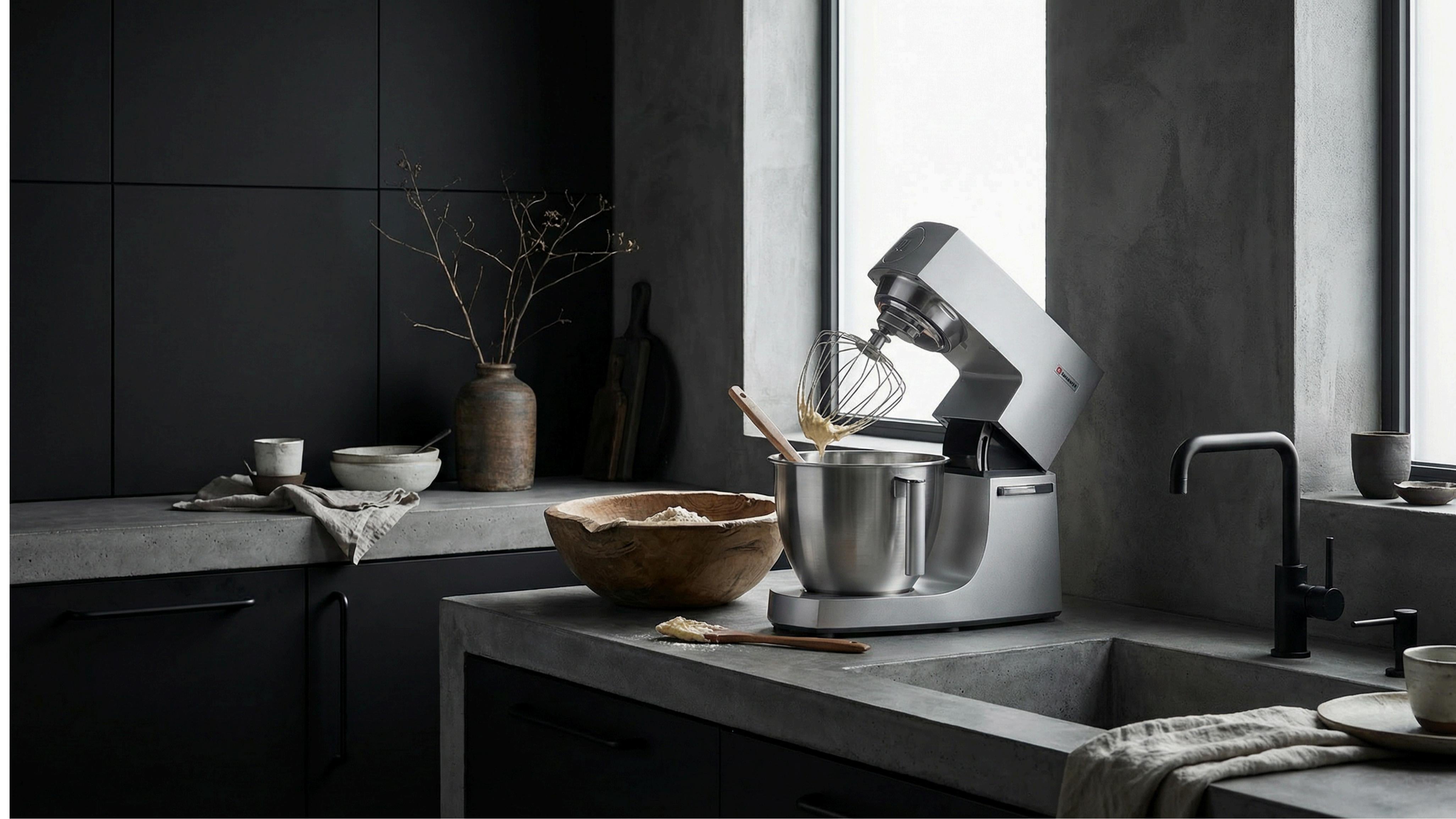
A DC motor tilt-head mixer combines the convenience of easy bowl access with the stability and power usually associated with bowl-lift models.

If you're comparing two mixers at the same price, and one has a DC motor and the other has an AC motor, the DC motor model is the better machine. Full stop.
Capacity: More Isn't Always Better
| Bowl Size | Best For | Dough Capacity | Watch Out For |
|---|---|---|---|
| 3.5 qt | Single person, occasional baking | ~500g | Can't handle bread dough comfortably |
| 4.5–5 qt | 1–2 people, mixed baking | ~800–1,000g | Sufficient for most home bakers |
| 5–5.5 qt | 2–4 people, regular bread baking | ~1,000–1,500g | The sweet spot for most households |
| 6–7 qt | Large families, batch baking | ~1,500–2,500g | Small batches may not reach the beater |
| 8+ qt | Commercial / semi-professional | 2,500g+ | Heavy, large footprint, overkill for most homes |
Common mistake: Buying the biggest bowl you can afford.

Head Design: Tilt-Head vs Bowl-Lift
We cover this in depth in our Tilt Head vs Bowl Lift Stand Mixer guide, but here's the quick version:
| Factor | Tilt-Head | Bowl-Lift |
|---|---|---|
| Adding ingredients | Easy — tilt back for full access | Bowl lowers but head partially blocks view |
| Counter clearance | Fits under standard cabinets (~17") | May need more vertical space |
| Dough stability | Can shake with AC motors | More stable with fixed head |
| Common sizes | 3.5–5.5 qt | 5–8 qt |
| Weight | 15–25 lbs | 25–35 lbs |
The key insight: The "tilt-head instability" problem is real — but only with AC motors. A DC motor tilt-head (like the Hauswirt M5max) eliminates the walking and shaking that give tilt-heads a bad reputation. You get the convenience of tilt-head access plus the stability of a bowl-lift, without the extra weight.
Build Quality: What to Look For (and What's a Red Flag)
Good signs: - All-metal gearbox — metal gears last years longer than nylon/plastic gears - Die-cast metal body — heavier base = less walking, better durability - Stainless steel bowl — resistant to scratching, dishwasher safe - Multiple attachment hub — expands your mixer's capabilities over time (see our stand mixer attachments guide for what's worth buying)
Red flags: - Plastic gear components — common in sub-$150 mixers, strip under heavy dough - Lightweight base — under 15 lbs means the mixer will move on your counter - Non-standard attachment hub — locks you into one brand's overpriced accessories - No overload protection — motor can burn out if you push it too hard
Best Stand Mixers by Budget (2026)
Under $150: What You Get (and What You Don't)
At this price point, every mixer uses an AC motor and plastic gear components. They work for light tasks — cake batter, cookie dough, whipped cream — but struggle with bread dough and will not last as long as higher-end models.
What to expect: - AC motor, 200–350W - 3.5–4.5 qt bowl - Plastic gears (common failure point) - 3–6 speed settings - Loud operation (75+ dB) - Not suitable for regular bread dough
Best pick in this range: Hamilton Beach 4-Quart 7-Speed — consistent performer for the price, accepts standard attachments. Just don't expect it to knead bread dough without protest.
$150–$300: The Value Sweet Spot
This is where the market gets interesting. You can find DC motor mixers, metal gearboxes, and capacities up to 5.5 quarts — if you know what to look for.
What to look for: - DC motor (not all mixers in this range have one — check the specs) - 5–5.5 qt stainless steel bowl - All-metal or primarily metal gearbox - 6–10 speed settings with soft start - Tilt-head design for easy access
Best picks in this range:
| Model | Motor | Capacity | Head Type | Key Advantage | Price |
|---|---|---|---|---|---|
| Hauswirt M5 | DC | 5 qt | Tilt-head | DC motor at entry price, quiet operation | ~$200 |
| Hauswirt M5max | DC | 5.5 qt | Tilt-head | 1,500g dough capacity, "Silent Stand Mixer" | ~$300 |
| Cuisinart SM-50 | AC | 5.5 qt | Tilt-head | Good capacity, well-known brand | ~$200 |
The Hauswirt M5max stands out here because it's one of the only mixers at this price with a DC motor. That means 60–65 dB operation (vs. 75+ dB for AC competitors), 1,500g dough capacity (enough for 3 loaves of bread), and a wider base that prevents the "walking" problem common in this price range.
$300–$500: The KitchenAid Zone (and Why You Should Look Beyond It)
This is KitchenAid's core territory — the Artisan Series ($350–$400) and Professional 600 ($450–$500). They're good machines with a massive attachment ecosystem. But they all use AC motors, and you're paying a significant brand premium.
What you're really paying for with KitchenAid: - 30+ color options - Largest attachment ecosystem in the market - Brand recognition and resale value - Widespread repair parts availability
What you're not getting: - DC motor (not available in any KitchenAid consumer model) - Quiet operation (75–80 dB at medium-high speed) - Competitive dough capacity per dollar (Artisan handles ~800–1,000g of dough vs. Hauswirt M5max's 1,500g at $100–$200 less)
The honest take: If color selection and the KitchenAid attachment ecosystem matter to you, the Artisan is a solid choice. But if you care about motor performance, noise, and dough capacity per dollar, a DC motor mixer at $200–$300 delivers more.
$500+: Heavy-Duty and Premium
At this price, you're looking at commercial-grade machines or premium brand models.
| Model | Motor | Capacity | Head Type | Best For | Price |
|---|---|---|---|---|---|
| Hauswirt M9 | DC | 6.5 qt | Bowl-lift | Large-batch bread, frequent heavy dough | ~$400 |
| KitchenAid Commercial 8 qt | AC | 8 qt | Bowl-lift | Commercial kitchens, very large batches | ~$600 |
| Ankarsrum Original | DC | 7 qt | Unique (open bowl) | Swedish design, excellent dough handling | ~$700 |
The Hauswirt M9 pairs a DC motor with 6.5-quart capacity and bowl-lift design — making it one of the few mixers that combines DC motor efficiency with large-bowl convenience for serious home bakers who make bread multiple times per week.
Quick Decision Guide: Which Stand Mixer Is Right for You?
Already know the basics? Jump to our best stand mixer for home bakers guide for focused recommendations. Otherwise, use the decision guide below.
I bake occasionally (cakes, cookies, maybe bread once a month): → 5-qt DC motor tilt-head (Hauswirt M5) — quiet, capable, won't break the bank
I bake regularly, including bread (2–4 times per week): → 5.5-qt DC motor tilt-head (Hauswirt M5max) — handles 1,500g dough, stays quiet, fits under cabinets
I make large batches of bread or bake for a big family: → 6.5-qt DC motor bowl-lift (Hauswirt M9) — maximum capacity with DC motor efficiency
I want the most attachment options and color choices: → KitchenAid Artisan 5-qt — largest ecosystem, 30+ colors, but AC motor
I'm on a tight budget: → Hamilton Beach 4-qt 7-Speed — decent for light tasks, upgrade later when budget allows
Stand Mixer Buying Checklist
Before you click "buy," run through this list:
- Hauswirt M5max Review — hands-on review covering noise level, dough handling, and how the DC motor stacks up against KitchenAid
- [ ] Motor type: DC motor preferred — check specs before assuming
- [ ] Capacity: 5–5.5 qt for most homes; 6+ qt only if you regularly bake large batches
- [ ] Head design: Tilt-head is fine with DC motor; bowl-lift if you prefer fixed-head workflow
- [ ] Gearbox: Metal gears > plastic gears (check product specs or reviews)
- [ ] Weight: 15+ lbs for stability; lighter machines walk on the counter
- [ ] Noise: DC motor = ~60–65 dB; AC motor = 70–80 dB
- [ ] Attachment hub: Standard hub size for future expansion
- [ ] Bowl material: Stainless steel (durable, dishwasher safe)
- [ ] Warranty: 2+ years minimum; 5 years is a sign of build confidence
- [ ] Counter space: Measure your counter-to-cabinet clearance before buying
5 Common Buying Mistakes (and How to Avoid Them)
1. Choosing by brand name alone
KitchenAid makes good mixers. But assuming "KitchenAid = best" leads you to pay $400+ for an AC motor machine when a $250 DC motor mixer handles more dough, runs quieter, and lasts longer. Check the specs, not just the logo.
2. Buying too much capacity
A 7-quart mixer for a household of two is like buying a delivery van for grocery runs. The bowl is too large for small recipes, the machine takes up more counter space, and you paid for capacity you'll never use.
3. Ignoring motor type
If you plan to make bread dough, motor type matters more than head design. An AC motor bowl-lift and a DC motor tilt-head both handle bread — but the DC motor tilt-head does it quieter, cooler, and often at a lower price.
4. Prioritizing attachments you'll never use
The ice cream maker attachment sounds fun. The grain mill seems like a great idea. In practice, most stand mixer owners use the flat beater, dough hook, and wire whisk 95% of the time. Buy the mixer for the motor and capacity — attachments can come later. For a full breakdown of which attachments are worth it, see our stand mixer attachments guide.
5. Not measuring counter clearance
Stand mixers live on the counter. If your mixer doesn't fit under your upper cabinets, you'll be lifting a 20–30 lb machine in and out of storage every time you bake. Most tilt-head mixers fit under standard 17-inch clearance. Bowl-lift models may need 19+ inches.
Frequently Asked Questions
What is the best stand mixer for home use?
For most home bakers, a 5–5.5 quart DC motor tilt-head stand mixer hits the sweet spot. It handles cakes, cookies, and bread dough, fits under kitchen cabinets, runs quietly, and costs less than comparable bowl-lift models. The Hauswirt M5 and M5max are strong options in this category.
Is a DC motor stand mixer really better than an AC motor?
Yes, for practical baking performance. DC motors deliver higher torque at low speeds (critical for heavy dough), run 10–15 dB quieter, produce less heat during extended kneading, and have fewer wear parts. The difference is most noticeable when kneading bread dough for more than 5 minutes.
How much should I spend on a stand mixer?
$200–$300 gets you a DC motor mixer with 5–5.5 quart capacity and metal gears — enough for any home baking task. Spending more than $300 gets you larger capacity, more color options, or brand-specific attachment ecosystems, but not necessarily better motor performance. Spending under $150 means accepting AC motor limitations and plastic gear components.
Can a stand mixer under $300 handle bread dough?
Yes — if it has a DC motor. A DC motor tilt-head like the Hauswirt M5max can handle 1,500g of dough (about 3 loaves) without walking or overheating. AC motor mixers under $300 will struggle with anything over 800–1,000g and may "walk" across the counter.
Which lasts longer: DC motor or AC motor stand mixers?
DC motors generally last longer because they have no carbon brushes to wear out. Combined with a metal gearbox, a DC motor stand mixer can deliver 15+ years of regular use. AC motor lifespan depends on brush wear and gear material — plastic-geared AC motors may need repair or replacement within 5–8 years of frequent use.
Should I buy a KitchenAid or a Hauswirt stand mixer?
It depends on your priorities. KitchenAid offers the largest attachment ecosystem and 30+ color options. Hauswirt offers DC motors (quieter, more torque, cooler operation) at significantly lower prices. If motor performance and value matter more than color choice and brand ecosystem, Hauswirt delivers more per dollar. For a detailed brand-by-brand breakdown, see our Hauswirt vs KitchenAid comparison. For more on head design differences, see our Tilt Head vs Bowl Lift guide.
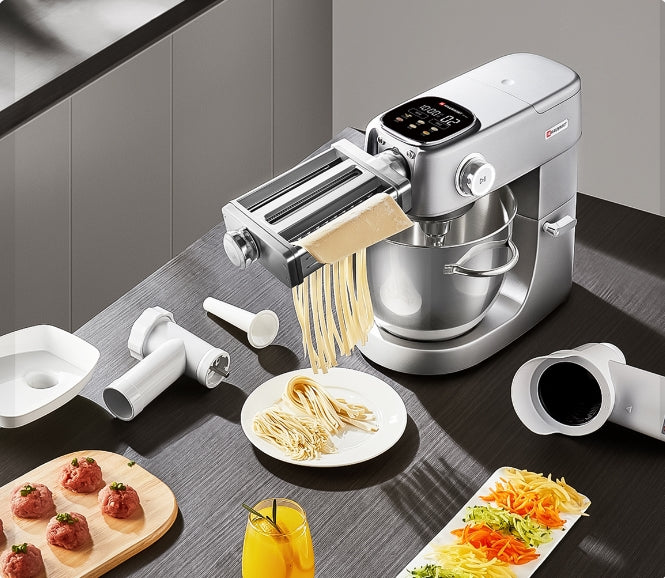
Wondering what else a stand mixer can do beyond baking? Our complete guide to stand mixer uses covers 20+ tasks — from shredding chicken to making pasta.
What to Do Next
- Measure your counter space — check the distance from your countertop to the bottom of your upper cabinets. Most tilt-head mixers need 15–17 inches of clearance; bowl-lift models need 17–19 inches.
- Decide your capacity — 5–5.5 quarts for most households; 6.5+ quarts only if you regularly bake for 6+ people or make large batches.
- Prioritize DC motor — regardless of brand or head design, a DC motor gives you quieter operation, better dough handling, and longer lifespan.
Ready to find the right mixer? Browse our full stand mixer collection to compare models side by side.
Sources: - Reddit communities: r/Baking, r/Breadit, r/Cooking, r/Kitchenaid, r/BuyItForLife — user-reported performance data and longevity experiences - Google Keyword Planner — search volume data for "best stand mixer" (4,900/month), "best affordable stand mixer" (1,600/month), "best stand mixer for bread dough" (1,300/month) - YouTube: Brian Lagerstrom, America's Test Kitchen, Red Star Yeast — comparative testing and noise measurements - Hauswirt product specifications — M5, M5max, M9 motor type, capacity, and performance data

