

Key Takeaways
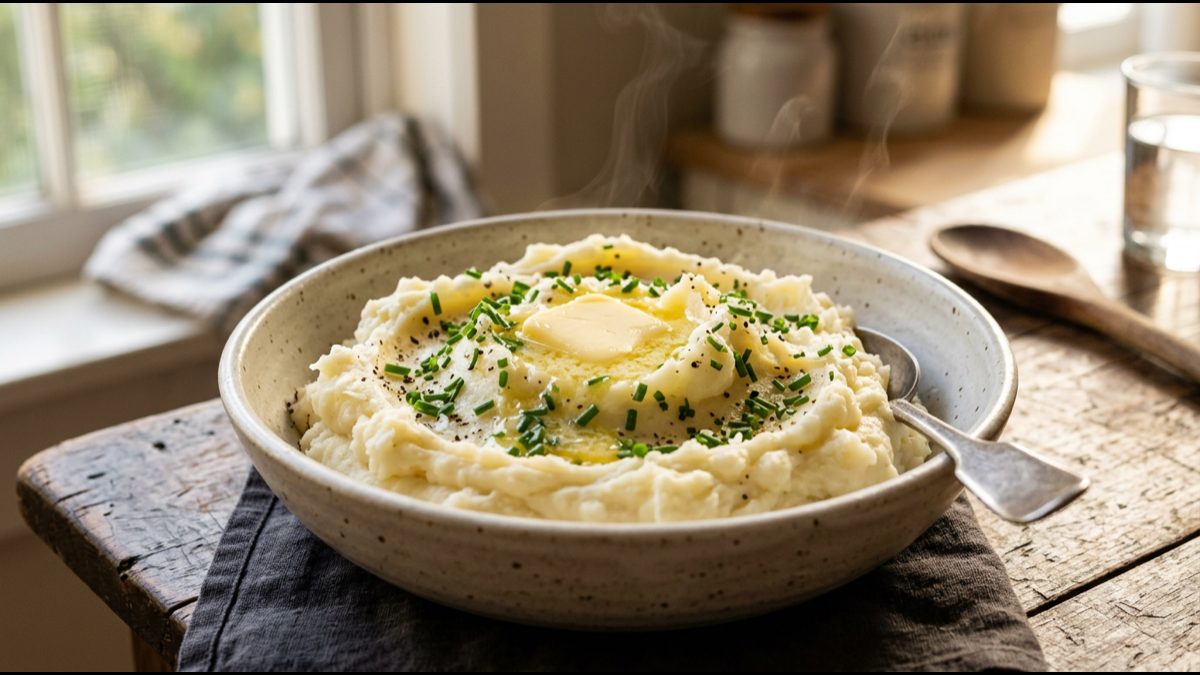
- A stand mixer produces fluffier, more consistent mashed potatoes than hand mashing — but only if you use the paddle attachment on low speed and stop the moment they're smooth. Overmixing is the #1 cause of gluey mashed potatoes. Once starches over-develop, there's no fixing it.
- Butter goes in first, before any liquid. Coating the starch granules with fat before adding milk or cream is the single most reliable way to prevent gumminess. Cold dairy is the second-biggest mistake — always warm your milk and butter together.
- Russets give you the lightest, fluffiest mash. Yukon Golds give you denser, creamier, more buttery results. A 50/50 blend gives you both. Avoid waxy potatoes like reds or fingerlings — they have too little starch to break down properly and turn gluey fast.
- Stand mixers shine for large batches (4+ lbs). Hand-mashing 5 lbs of potatoes for Thanksgiving is an arm workout. A stand mixer does it in 30-60 seconds with better consistency. It's also hands-free, so you can make the gravy while the potatoes finish.
- Make-ahead mashed potatoes actually taste better. The flavors meld overnight, and reheating with a splash of warm cream brings them back to fresh. High-fat versions (with cream cheese or sour cream) hold in the fridge for up to 3 days and freeze for up to 2 weeks.
There are three ways to make mashed potatoes: by hand with a masher (arm workout), with a food processor (glue factory), or with a stand mixer. Only one of them gives you consistently fluffy, lump-free results without the risk of turning your potatoes into wallpaper paste.
The stand mixer method isn't complicated — but it is unforgiving. Thirty extra seconds of mixing is the difference between cloud-like and gluey. The wrong attachment on the wrong speed ruins 5 lbs of Yukon Golds before you even taste them. And the order you add butter and cream matters more than most recipes admit.
This guide covers the entire process: which potatoes to buy, which attachment to use, exactly how long to mix, what to do ahead of time, and how to fix it when things go wrong.
Why a Stand Mixer Works Better Than Hand Mashing
A potato masher breaks potatoes by compression — you're crushing the cells, which releases starch unevenly. A ricer gets closer but it's slow and you still need to fold in butter and cream by hand. A stand mixer with the paddle attachment does three things at once: it breaks up the potato pieces evenly, incorporates air for lightness, and distributes butter and cream uniformly through the mash.
The result is smoother, fluffier, and more consistent than anything you can do by hand — especially in large batches. For a holiday dinner with 10+ people, this matters.
What you should never use: a food processor or blender. Their blades spin too fast, shearing starch molecules open and releasing massive amounts of amylose into the mix. That's how you get the gluey, stretchy, "mashed potatoes you can slice with a knife" texture. No amount of butter fixes it.
Choosing the Right Potatoes
Not all potatoes mash the same way. The difference comes down to starch content.
| Potato Type | Starch Level | Texture Result | Best For |
|---|---|---|---|
| Russet (Idaho) | High (20-22%) | Light, fluffy, cloud-like | Classic mash that soaks up gravy; holiday dinners |
| Yukon Gold | Medium (16-18%) | Dense, creamy, naturally buttery | Standalone side dish; rich, golden presentation |
| 50/50 Blend | Mixed | Fluffy structure + creamy mouthfeel | The best of both worlds; the safe choice for any occasion |
| Red / Fingerling | Low (14-16%) | Waxy, gluey when mashed | Do not use for mashed potatoes |
Russets are the standard for a reason: high starch means the cells separate cleanly when cooked, and the dry texture absorbs butter and cream without turning soupy. Yukon Golds have less starch but more natural sugar and a buttery flavor — they produce a denser, richer mash that some people prefer on its own, without gravy.
If you're serving mashed potatoes as a gravy vehicle next to turkey, go Russet. If they're the star of the plate next to a simple roast, go Yukon Gold. If you're not sure, do the 50/50 blend — you get the fluffiness of the Russets with the creamy mouthfeel of the Yukon Golds.
Buying tip: Buy loose potatoes, not bagged. Bags hide rot, bruises, and uneven sizing. Pick firm potatoes of similar size so they cook at the same rate.
The Right Attachment and Speed Setting
This is where most guides get vague. Here are the specifics.
Use the Flat Beater (Paddle), Not the Whisk or Dough Hook
The flat beater / paddle attachment is the correct tool for mashed potatoes. Here's why the other two are wrong:
- Wire whisk: Incorporates too much air. It whips the potatoes rather than mashing them, creating a foamy, almost mousse-like texture. Some people like this, but most are looking for mashed potatoes, not potato foam. The whisk also scrapes less effectively against the bowl sides.
- Dough hook: Designed to stretch gluten, not mash potatoes. It pushes the potatoes around the bowl without breaking them up evenly. You'll end up with some chunks obliterated and others untouched.
- Flat beater: Breaks potatoes into uniform pieces, incorporates just enough air for lightness, and scrapes the bowl sides cleanly. This is what you want.
Speed Settings by Mixer Brand
Start low, finish medium. Never go above medium speed for mashed potatoes — high speed is what overworks the starch.
| Mixer Brand | Start Speed (Butter) | Finish Speed (Cream) |
|---|---|---|
| KitchenAid Tilt-Head | 2 | 4 |
| KitchenAid Bowl-Lift | 2 | 4 |
| Hauswirt M5max | 1-2 | 3-4 |
| Bosch Universal Plus | 1 | 2 |
| Ankarsrum | Low (1-2 o'clock) | Medium (3-4 o'clock) |
The exact number doesn't matter as much as the principle: start low to break up the chunks, increase slightly to incorporate cream, stop as soon as the texture looks right. Total mixing time should be 30-90 seconds — if you're still mixing after 2 minutes, you've already overmixed.
Step-by-Step: Stand Mixer Mashed Potatoes
| Ingredient | 4 servings | 8-10 servings (Holiday) |
|---|---|---|
| Russet potatoes (or 50/50 blend) | 2 lbs | 5 lbs |
| Unsalted butter | 4 tbsp (½ stick) | 10-12 tbsp (1¼-1½ sticks) |
| Half-and-half or heavy cream | ½ cup | 1-1¼ cups |
| Kosher salt | 1 tsp (plus more for water) | 2-3 tsp (plus more for water) |
| Black pepper (freshly ground) | To taste | To taste |
Step 1: Peel and Cut Evenly
Peel the potatoes and cut into uniform 1½-2 inch chunks. Even size = even cooking. If some pieces are twice the size of others, the small ones will be waterlogged by the time the large ones are tender.
Step 2: Rinse, Then Start Cold
Rinse the cubed potatoes in a colander under cold water for 30 seconds — this removes surface starch that would otherwise turn into scum during boiling. Transfer to a large pot and cover with cold water by about 2 inches. Add a generous tablespoon of kosher salt to the water.
Always start with cold water. If you drop potatoes into already-boiling water, the outside cooks faster than the center. Cold water means the exterior and interior come to temperature together.
Step 3: Boil Until Fork-Tender
Bring to a boil over high heat, then reduce to a steady simmer. Cook until a fork slides into the largest chunk with no resistance — about 15-20 minutes depending on cube size. Don't rely on the timer; test with a fork. Undercooked potatoes won't mash smoothly no matter how long you mix.
Step 4: Drain and Dry (Don't Skip This)
Drain the potatoes in a colander. Return the empty pot to the stove over low heat for 30 seconds, then add the potatoes back in. Let them sit over low heat for 1-2 minutes, shaking the pot once or twice. You'll see steam rising — that's surface moisture evaporating. Dry potatoes absorb butter and cream better than wet ones.
Step 5: Transfer and Add Butter First
Transfer the hot potatoes to your stand mixer bowl. Attach the flat beater (paddle). Add the butter first — don't add any liquid yet. Mix on low speed (Speed 2 on most mixers) for about 20-30 seconds until the butter melts and the potatoes break into small crumbles.
Why butter first: Fat coats the starch granules before water-based liquid hits them. This creates a barrier that prevents the starches from linking up into a gluey network. It's the same principle as starting a roux — fat first, then liquid.
Step 6: Add Warm Cream Gradually
While the potatoes boil, warm the cream and any remaining butter together in a small saucepan until just steaming — don't let it boil. Cold dairy shocks the potatoes and requires more mixing to incorporate, which increases the risk of overworking the starch.
With the mixer on low, pour the warm cream mixture in a slow, steady stream. Increase speed slightly (Speed 3-4) and mix just until the cream is absorbed and the potatoes look smooth — about 20-30 more seconds.
Step 7: Stop and Check
Stop the mixer the moment the potatoes look cohesive and creamy. Scrape down the bowl with a spatula. Taste for salt and pepper, folding in any extra seasoning by hand.
The golden rule: stop before you think you should. Carryover mixing — the few seconds the paddle keeps moving through the potatoes after you think you're done — is real. If the potatoes look "almost there," they're done. Fold once by hand and walk away.
The 5 Most Common Mistakes (And How to Avoid Them)
| Mistake | What Happens | How to Prevent It |
|---|---|---|
| 1. Overmixing | Starch molecules shear open, releasing amylose. Potatoes turn gummy, gluey, and stretchy. Irreversible. | Stop the mixer at 30-60 seconds total. If they look "almost done," they are done. Fold once by hand and stop. |
| 2. Adding cold dairy | Cold milk or cream shocks hot potatoes, seizes the starch, and requires more mixing to warm through — double risk of overmixing. | Warm butter and cream together in a small saucepan until steaming (not boiling). Pour in gradually. |
| 3. Adding liquid before butter | Water-based liquid hits unprotected starch granules first, hydrating them into a glue network before fat can coat them. | Butter always goes in first. Mix until the potatoes are coated, then add cream. |
| 4. Using waxy potatoes | Red potatoes, fingerlings, and new potatoes have low starch and high moisture. They turn dense and gluey instead of fluffy. | Use Russets for fluffiness, Yukon Golds for creaminess, or a 50/50 blend. Never use waxy potatoes. |
| 5. Skipping the drying step | Wet potatoes dilute the butter and cream. The mash tastes watery and needs more mixing to reach the right consistency. | Let drained potatoes sit in the hot empty pot for 1-2 minutes to steam off surface moisture. |
Flavor Variations: What to Add (and When)
Add-ins fall into two categories: those that go in with the butter and cream (flavor infusions, dairy-based), and those that get folded in by hand at the end (textured ingredients, fresh herbs).
Add With the Butter/Cream (Infuse First)
- Roasted garlic: Wrap a whole head of garlic in foil, roast at 400°F for 40 minutes until soft. Squeeze the cloves into the warm cream and whisk to combine before adding.
- Browned butter: Cook butter in a saucepan over medium heat until the milk solids turn amber and it smells nutty (3-5 minutes). Use this instead of plain melted butter. Adds depth that plain butter can't match.
- Herb-infused cream: Simmer the cream with a sprig of rosemary, a few thyme branches, and a bay leaf for 5 minutes. Strain, then add to the potatoes. The flavor is subtle but unmistakable.
- Cream cheese: 4 oz (for 5 lbs potatoes), softened to room temperature. Adds tang and a silkier texture. Also helps with the make-ahead method — cream cheese acts as a stabilizer.
- Sour cream or crème fraîche: ½ cup. Similar effect to cream cheese but tangier. Good with chives folded in at the end.
Fold In By Hand at the End
- Fresh chives, parsley, or dill: Chopped fine, folded in after mixing. If you mix herbs with the paddle, they bruise and turn the potatoes green-gray.
- Grated Parmesan or Pecorino: ½ cup. Adds umami and a slight nuttiness.
- Crispy bacon, pancetta, or prosciutto: Cooked until crisp, crumbled, folded in. Add just before serving so it stays crispy.
- Caramelized onions or shallots: Cooked low and slow until deeply brown (20-30 minutes). Fold in for sweetness against the rich potatoes.
- Gruyère, smoked gouda, or sharp cheddar: ½-1 cup shredded. Fold in while potatoes are still hot so the cheese melts in ribbons.
Make-Ahead Mashed Potatoes: The Holiday Lifesaver
Mashed potatoes made a day ahead taste better than same-day — the flavors meld overnight, and the texture holds if you build in extra fat. There are two reliable methods.
Method 1: Cream Cheese Stabilizer (Best for 1-3 Days Ahead)
This is the most forgiving method. Cream cheese and sour cream add fat and emulsifiers that keep the potatoes creamy through refrigeration and reheating.
- Make the potatoes as directed, adding 4 oz cream cheese and ½ cup sour cream along with the butter and cream.
- Spread into a buttered baking dish. Dot the top with small pieces of butter.
- Cover tightly with foil and refrigerate for up to 3 days.
- To reheat: Bake covered at 350°F for 30-40 minutes. Remove foil for the last 10 minutes if you want a slightly golden top. Stir once before serving.
Method 2: Extra-Liquid Loosen (Best for 1-2 Days Ahead)
No cream cheese required. The trick is adding extra liquid on day one, because the potatoes absorb moisture as they sit.
- Make the potatoes as directed, but add an extra ¼-½ cup of warm cream beyond what looks right. The potatoes should look slightly looser than you'd serve them.
- Cool, cover tightly, and refrigerate for up to 2 days.
- To reheat: Transfer to a stand mixer bowl, add a splash of warm cream, and mix on low speed just until smooth and hot (about 30 seconds). Or microwave at 70% power in 2-minute intervals, stirring between each.
Freezing (Up to 2 Weeks)
Only the high-fat cream cheese/sour cream version freezes well. Lean mashed potatoes freeze poorly — the water in them forms ice crystals that rupture cell walls, and they weep liquid when thawed.
- Line a baking dish with plastic wrap or foil, leaving overhang.
- Spread the potatoes in the dish, cover, and freeze until solid (about 4 hours).
- Lift the frozen block out using the overhang, wrap tightly, and return to freezer for up to 2 weeks.
- Thaw overnight in the fridge. Bake at 350°F for 30-40 minutes, stirring once halfway.
Troubleshooting: Quick Fixes for Common Problems
| Problem | Likely Cause | Fix |
|---|---|---|
| Gummy or gluey | Overmixed; starches over-developed | Can't fully fix, but add 2-3 tbsp melted butter and fold gently. Serve with plenty of gravy. Next time: stop mixing sooner. |
| Too thick / stiff | Not enough liquid, or potatoes were very dry | Add warm milk or cream 1 tablespoon at a time, folding by hand until loosened. |
| Too loose / soupy | Too much liquid added | Let sit uncovered for 5 minutes so steam escapes. Or fold in a hot, riced potato to absorb excess liquid. |
| Lumpy | Potatoes undercooked; some pieces not fork-tender | Can't fix in the mixer without overmixing the rest. Press through a ricer or tamis, or serve as "rustic" mash. |
| Bland | Undersalted cooking water + undersalted mash | Add salt in small pinches, tasting after each addition. Potatoes need more salt than you think. A pinch of MSG (seriously) helps if you have it. |
| Gray or dull color | Potatoes oxidized (cut too far ahead) or overmixed | Not reversible, but a splash of warm cream and a pat of butter on top before serving masks it visually. |
FAQ
Can you make mashed potatoes in a stand mixer?
Yes. A stand mixer with the flat beater (paddle) attachment makes fluffier, more consistent mashed potatoes than hand mashing — especially for large batches. Use low to medium speed and stop after 30-60 seconds to avoid overmixing.
What attachment do you use for mashed potatoes in a stand mixer?
The flat beater (paddle attachment). Do not use the wire whisk (too much air, foamy texture) or the dough hook (uneven mashing). The paddle breaks potatoes into uniform pieces while incorporating just enough air for lightness.
Why did my stand mixer mashed potatoes turn out gluey?
You overmixed them. When potato starch is worked too long — especially at high speed — the starch granules rupture and release amylose, which creates a glue-like network. This is irreversible. Next time, stop mixing the moment the potatoes look smooth (30-60 seconds total).
Should I use the whisk or paddle for mashed potatoes?
Use the paddle (flat beater). The whisk whips too much air into the potatoes and produces a foamy, mousse-like texture. The paddle gives you classic creamy-fluffy mashed potatoes with better control.
What are the best potatoes for stand mixer mashed potatoes?
Russets produce the lightest, fluffiest texture — best for soaking up gravy. Yukon Golds produce a denser, creamier, more buttery mash. A 50/50 blend gives you both. Avoid waxy potatoes (reds, fingerlings) — they turn gluey.
How far ahead can you make mashed potatoes?
With cream cheese or sour cream added as stabilizers: up to 3 days in the fridge. Without stabilizers but with extra liquid: 1-2 days in the fridge. High-fat versions freeze for up to 2 weeks. Reheat with a splash of warm cream to bring them back.
Can you use a hand mixer instead of a stand mixer for mashed potatoes?
Yes, but it's harder to control. A hand mixer is more likely to overmix because you can't see the potatoes as clearly and the beaters are smaller. If using a hand mixer, keep it on the lowest speed and stop after 20-30 seconds. A stand mixer with the paddle attachment gives more consistent results with less risk.
What to Do Next
If you're making mashed potatoes for a holiday crowd, start with Russets or a 50/50 Russet-Yukon Gold blend, plan to make them a day ahead using the cream cheese method, and warm your dairy. Those three decisions eliminate 90% of what goes wrong.
For more stand mixer techniques and recipes:
- 5 Essential Stand Mixer Recipes: Cookies, Bread, Pizza Dough, Cake & Whipped Cream — if you're ready to use your mixer for more than mashed potatoes
- How to Make Bread Dough in a Stand Mixer — the complete guide to kneading dough with confidence
- Stand Mixer Attachments Guide — every attachment explained, including the paddle, whisk, and dough hook
- Shop Hauswirt Stand Mixers — DC motor mixers with full low-speed torque, including the M5max (500W, 6QT, 45dB)

