

Key Takeaways
- Meringue is just two ingredients — egg whites and sugar — but the difference between a glossy French meringue and a weeping puddle is grease, speed, and patience. A single trace of egg yolk or a bowl that's not bone-dry ruins it.
- Speed 8-10 for French meringue, speed 6-8 for Swiss and Italian. Start at speed 2 for 1 minute to break up the whites, then ramp to high. Add sugar 1 tablespoon at a time at speed 6+ — dumping it in at once deflates the foam.
- French meringue takes 5-8 minutes to stiff peaks. Swiss takes 8-12 minutes (the bowl must cool). Italian takes 3-5 minutes after the hot syrup is in. The meringue is done when it holds a sharp peak that doesn't flop and feels smooth, not grainy, between your fingers.
- The three types are not interchangeable. French (raw whites + sugar, whipped) is for cookies and pavlova. Swiss (whites + sugar heated over a double boiler, then whipped) is for buttercream. Italian (hot sugar syrup poured into whipping whites) is for mousse and frosting. They behave differently in every application.
- Most meringue failures trace to one of three things: a greasy bowl, sugar added too fast, or stopping before the sugar fully dissolves. Rub a bit between your fingers — if it feels gritty, keep whipping.
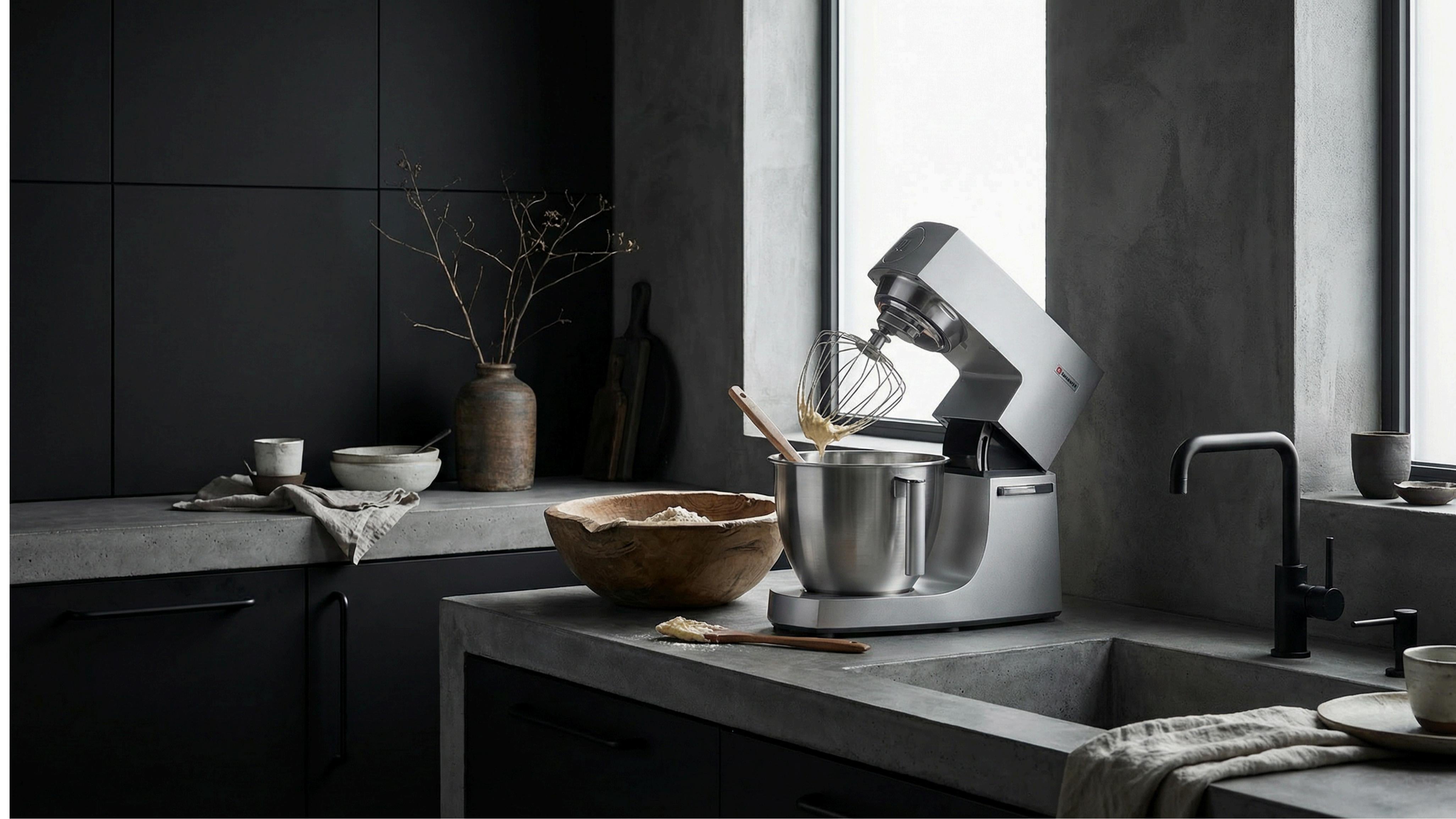
Meringue is where the stand mixer earns its counter space. Hand-whipping egg whites to stiff peaks takes 12-15 minutes of uninterrupted, painful work. The stand mixer does it in 5 while you measure the rest of the ingredients.
The catch: meringue punishes shortcuts. A drop of yolk, a wet bowl, sugar dumped in all at once — each one is a fail state that experienced bakers learn the hard way. This guide covers the three types of meringue, the exact speeds and times, and how to fix the eight most common meringue disasters.
The Three Types of Meringue
Before you turn on the mixer, know which meringue the recipe needs. They look similar in the bowl but act completely differently in the oven, in buttercream, or under a torch.
| Type | Method | Stability | Best For |
|---|---|---|---|
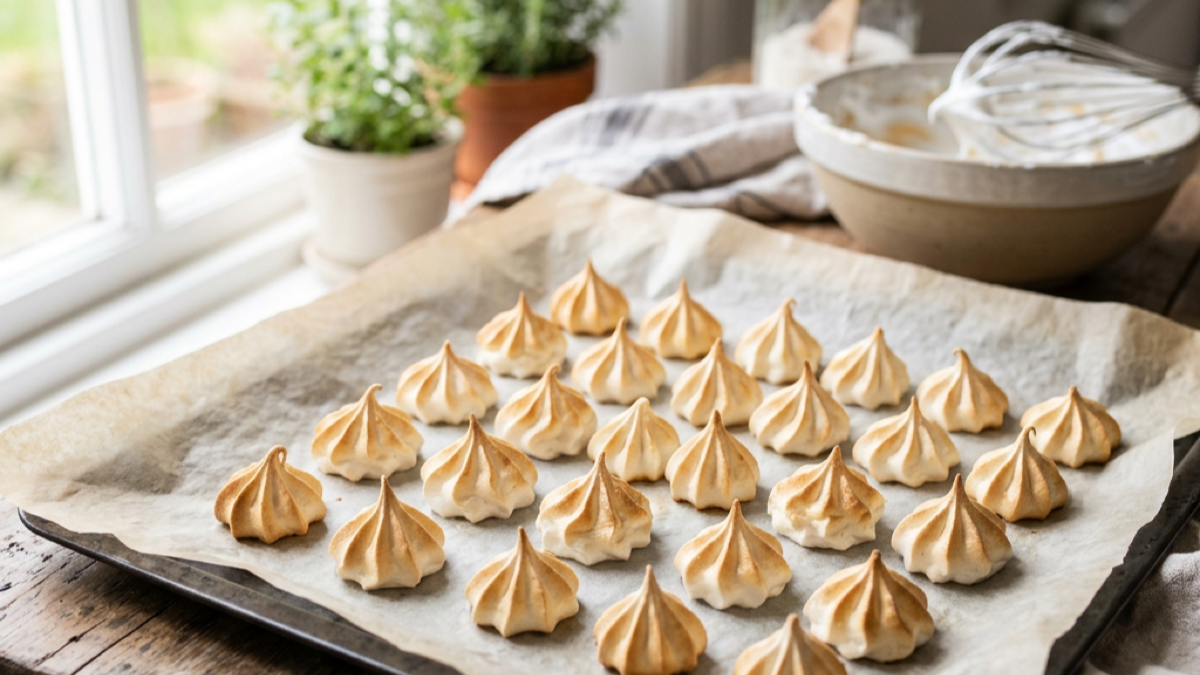
| French | Raw egg whites + granulated sugar, whipped cold | Least stable. Must be baked | Meringue cookies, pavlova, baked Alaska, folding into cake batter |
| Swiss | Whites + sugar heated to 160°F over a double boiler, then whipped until cool | Very stable. Smooth, silky | Swiss meringue buttercream, pie topping (torched), macarons |
| Italian | Hot sugar syrup (240°F) poured in a thin stream into whipping egg whites | Most stable. Cooked by syrup heat | Mousses, semifreddo, Italian meringue buttercream, marshmallow frosting |
French is where to start. It's the simplest. Swiss is worth learning for buttercream alone — it doesn't taste like raw eggs and pipes cleaner. Italian is the restaurant version: intimidating but unbeatable for stability.
French Meringue: The One You'll Make Most
Ingredients: 4 large egg whites (room temperature), 1 cup granulated sugar, 1/4 teaspoon cream of tartar or 1/2 teaspoon lemon juice, pinch of salt.
Step by step:
1. Separate the eggs. Cold eggs separate cleaner — yolk holds together better. Separate each egg into a small bowl first, then transfer the white to the mixer bowl. One broken yolk in the batch ruins all four whites. After separating, let whites sit 20-30 minutes to reach room temperature. Warm whites whip to higher volume.
2. Clean the bowl. Wipe the bowl and whisk with a paper towel dipped in white vinegar or lemon juice. Any trace of grease — butter residue, a fingerprint from handling butter earlier — prevents peaks from forming. This is the step most home bakers skip and later regret.
3. Start slow, add acid. Attach the whisk. Add egg whites and cream of tartar. Start at speed 2. After about a minute, when the whites are foamy and opaque, add the salt. Keep whipping.
4. Ramp to high, add sugar slowly. When the foam is white and beginning to thicken (soft peaks stage), increase to speed 8. Add sugar 1 tablespoon at a time, waiting 15-20 seconds between additions. This is the thing that separates meringue from scrambled-egg-soup: sugar must dissolve completely. Dumping it in at speed 2 collapses the foam.
5. Whip to stiff peaks. Keep going at speed 8-10. The meringue will go from glossy and floppy to glossy and firm. Total time: 5-8 minutes. Stop and test: lift the whisk. The peak should stand straight up without the tip curling. Rub a bit between your fingers — if it feels gritty, whip another 30 seconds and test again.
For the full breakdown of what each speed does and when to change, see the stand mixer speed settings guide.
Swiss Meringue: For Buttercream and Silk
Ingredients: 4 egg whites, 1 cup granulated sugar, 1/4 teaspoon cream of tartar.
1. Heat the whites and sugar. Combine egg whites and sugar in the mixer bowl. Place over a saucepan with 1 inch of simmering water — the bowl should not touch the water. Whisk constantly by hand until the mixture reaches 160°F and the sugar dissolves completely. Rub between your fingers: no grit. This takes about 3-5 minutes.
2. Transfer to mixer, add acid, whip. Move the bowl to the stand mixer. Add cream of tartar. Start at speed 2, increase to speed 8. Whip until the bowl feels cool to the touch and the meringue holds stiff glossy peaks — about 8-12 minutes. The bowl must cool or the buttercream will melt.
3. Add butter for buttercream. Switch to the paddle attachment. Add room-temperature butter in chunks at speed 4. It will look curdled around minute 3 — that's normal, don't panic. Keep going. By minute 5-6 it comes together into smooth, silky buttercream.
Italian Meringue: The Restaurant One
Italian meringue is cooked by hot sugar syrup instead of a double boiler. It's the most stable and the most hands-on.
1. Start the whites. Put 4 egg whites + cream of tartar in the mixer. Start at speed 2.
2. Cook the syrup. In a saucepan, combine 1 1/4 cups sugar with 1/3 cup water. Heat without stirring until it reaches 240°F (soft-ball stage). Use a thermometer — eyeballing doesn't work here.
3. Pour and whip. When whites are at soft peaks and syrup hits 240°F, increase mixer to speed 6. Pour the hot syrup in a thin, steady stream down the side of the bowl — not onto the whisk or it splatters. Keep whipping at speed 8 until the bowl is just warm, about 3-5 minutes. The meringue will be dense, glossy, and marshmallow-like.

Hauswirt M5 Max 6QT Stand Mixer for Effortless Home Baking
500W DC Motor | 6QT Bowl | 45dB Quiet | 4.5" Touchscreen
Seven Meringue Problems and How to Fix Them
| Problem | Cause | Fix |
|---|---|---|
| Won't form peaks | Grease or yolk in the bowl | Start over with clean bowl. Vinegar wipe everything |
| Weeping (syrup pooling) | Under-whipped or sugar not dissolved | Whip longer. Rub between fingers — must feel smooth |
| Beading (droplets on baked meringue) | Oven too hot, overcooked | Bake at 200-225°F. Meringue cookies should dry, not brown |
| Shrinking after baking | Temperature shock | Turn off oven, crack door, let cool inside for 1 hour |
| Deflates when folding | Over-whipped (dry, clumpy whites) | Stop at stiff glossy peaks. Dry/curdled = already broken |
| Grainy texture | Sugar not fully dissolved | Use superfine sugar for French. Always dissolve fully for Swiss/Italian |
| Egg smell or taste | Low-quality eggs or undercooked French meringue | Use Swiss or Italian for no-bake applications. French must be baked |
Frequently Asked Questions
What speed do you whip meringue on a stand mixer?
Speed 8-10 for French meringue, 6-8 for Swiss and Italian. Always start at speed 2 for the first minute to build small stable bubbles, then ramp up. Starting at high speed right away creates large unstable bubbles that collapse later.
Can I make meringue in a stand mixer without cream of tartar?
Yes. Cream of tartar is an acid that stabilizes the egg white proteins. You can substitute 1/2 teaspoon of lemon juice or white vinegar per 4 egg whites. The meringue will be slightly less stable but works fine. If you have copper bowls (rare in home kitchens), the copper ions do the same job naturally.
Why did my meringue weep?
Weeping is syrup pooling under the meringue, and it has two causes. First: under-whipping — the sugar didn't fully dissolve. Second: over-baking which forces moisture out of the egg whites. Fix: whip until the sugar dissolves completely (rub test), and bake meringues at low heat (200-225°F) until dry, not brown.
How long does meringue take to whip in a stand mixer?
French meringue: 5-8 minutes. Swiss: 8-12 minutes (plus 3-5 minutes on the stove). Italian: 3-5 minutes after the syrup goes in. The exact time depends on egg temperature, mixer power, and humidity. Stop when the peak test passes, not on a timer.
Can I make Swiss meringue buttercream without a stand mixer?
Technically yes, with a hand mixer, but it takes 15-20 minutes of continuous mixing and your arm will be destroyed. The stand mixer's sustained high speed while the bowl cools is what makes Swiss meringue buttercream practical for home bakers.
What's the difference between soft peaks and stiff peaks for meringue?
Soft peaks: when you lift the whisk, a peak forms but the tip flops over immediately. The meringue is glossy and white. Stiff peaks: the peak stands straight up, the tip doesn't move, and the meringue is thick and marshmallow-like. French meringue always goes to stiff peaks before baking. Stop at stiff, shiny peaks — if it looks dry, curdled, or clumpy, you've over-whipped and need to start over.
What to Do Next
If you just made French meringue, turn it into whipped cream's lighter cousin — both use the whisk attachment on high speed, same principle, different ingredient. If you're on a buttercream kick, read the whisk attachment guide for speeds, times, and troubleshooting across all whipping tasks. Need the right mixer? Browse the Hauswirt collection.
Sources
- King Arthur Baking — How to Make Meringue (French, Swiss, Italian methods and troubleshooting).
- Stella Parks / Serious Eats — The Science of Swiss Meringue Buttercream (temperature, timing, and curdling fix).
- America's Test Kitchen — Perfect Meringue Cookies (oven temperature, beading, and sugar dissolution testing).
- Harold McGee — On Food and Cooking (egg white protein chemistry: ovalbumin, conalbumin, and foam stabilization).

