

Key Takeaways
- American buttercream is the easiest type — butter, powdered sugar, and a splash of milk — and a stand mixer's paddle attachment makes it in 5 minutes hands-free.
- The paddle attachment beats the whisk for American buttercream. It pushes out air bubbles while working in enough air for a spreadable, pipeable texture.
- Grainy buttercream = butter was too cold. Runny buttercream = butter was too warm. Both are fixable in under 2 minutes.
- For Swiss meringue buttercream — the silky bakery-style frosting — a stand mixer is non-negotiable. It needs 8-10 minutes of continuous high-speed whipping.
- DC motor stand mixers hold speed when buttercream thickens. Weaker AC motors bog down under load, and inconsistent speed = broken emulsion.
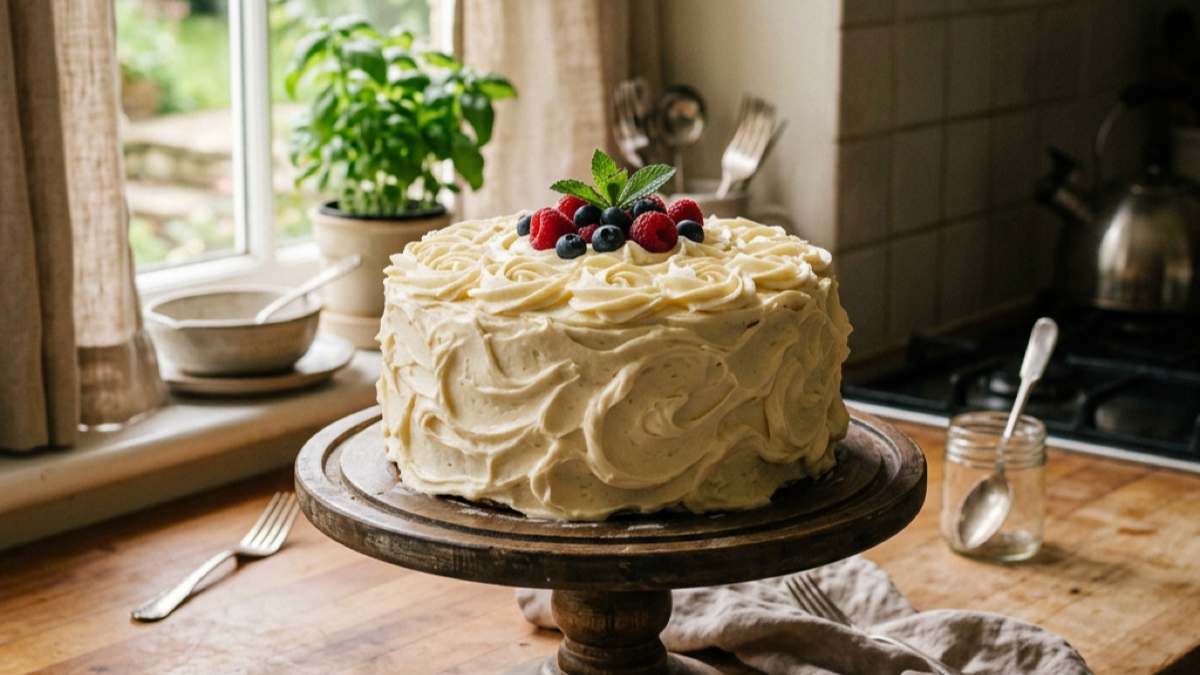
Buttercream is the difference between a cake that looks homemade and one from a bakery. And the stand mixer is the tool that makes that difference.
You can make frosting with a hand mixer. But a stand mixer frees up your hands to add ingredients and check consistency — no scrambling to scrape the bowl while the mixer walks across the counter. This guide covers the 4 main buttercream types, which attachment to use, step-by-step instructions, and fixes for every common problem.
The 4 Types of Buttercream (And When to Use Each)
Not all buttercream is the same thing. Grab the wrong type for a recipe and you'll wonder what went wrong.
American Buttercream
American buttercream is butter beaten with powdered sugar and a splash of milk or cream. It's sweet, sturdy at room temperature, and takes about 5 minutes. Use the paddle attachment at medium speed. Best for: birthday cakes, cupcakes, cookie filling. It crusts slightly, which makes it good for piping flowers.
Swiss Meringue Buttercream
The bakery-style frosting — silky, not too sweet, holds its shape. Swiss meringue buttercream starts by heating egg whites and sugar until the sugar dissolves, then whips them into a glossy meringue before adding butter. It needs a stand mixer for 8-10 minutes of high-speed whipping. Use the whisk attachment. Best for: wedding cakes, layer cakes, anywhere you want a professional finish.
Italian Buttercream
Similar to Swiss but pours hot sugar syrup into whipping egg whites. It's the most stable buttercream in warm weather and has the lightest texture. A stand mixer is essential — you need both hands to pour hot syrup in a thin stream while the mixer runs. Best for: outdoor summer events, cakes that sit out for hours.
Cream Cheese Frosting
Technically not a buttercream but used the same way. Cream cheese + butter + powdered sugar + vanilla. Key rule: don't overwhip. Cream cheese gets looser the more you beat it. Use the paddle on medium-low, stop the second it comes together. Best for: carrot cake, red velvet, cinnamon rolls.
Which Attachment to Use (Paddle vs Whisk)
This trips people up. The answer depends on the type.
| Buttercream Type | Attachment | Speed | Time |
|---|---|---|---|
| American | Paddle | Medium (4-6) | 5-7 min |
| Swiss Meringue | Whisk | High (8-10) | 8-12 min |
| Italian | Whisk, then paddle | High → Medium | 10-15 min |
| Cream Cheese | Paddle | Medium-Low (2-4) | 2-3 min |
Why paddle for American buttercream? The whisk whips in too much air, giving you a frosting full of bubbles. The paddle's flat surface pushes air out while still creaming butter and sugar into something spreadable. For meringue-based types, the whisk is non-negotiable — a paddle can't whip egg whites to stiff peaks.
How to Make American Buttercream in a Stand Mixer
This is the recipe you'll use 90% of the time.
Ingredients: 1 cup (226g) unsalted butter, softened to room temp · 4 cups (480g) powdered sugar, sifted · 2-3 tbsp heavy cream or milk · 1 tsp vanilla · pinch of salt
Step 1: Beat the butter. Paddle attachment, medium speed (4-5), 2-3 minutes until pale and fluffy. Scrape the bowl once.
Step 2: Add sugar gradually. Mixer on low (speed 1-2), add powdered sugar one cup at a time. Dump it all at once and you'll wear a cloud of sugar dust.
Step 3: Add liquid and whip. Pour in vanilla, salt, and 2 tablespoons of cream. Medium-high (6-7) for 3-4 minutes. The frosting should turn lighter and fluffier.
Step 4: Adjust. Too thick? Add cream half a tablespoon at a time. Too thin? Add powdered sugar a quarter cup at a time. You want a frosting that holds a peak but spreads without tearing your cake.
One thing that matters more than people realize: consistent mixing speed. When buttercream thickens, weaker motors slow down and the texture goes from fluffy to dense. DC motor stand mixers hold speed constant regardless of resistance.

Hauswirt M5 Max 6QT Stand Mixer for Effortless Home Baking
500W DC Motor | 6QT Bowl | 45dB Quiet | 4.5" Touchscreen
Swiss Meringue Buttercream: The Bakery Finish
American buttercream is forgiving. Swiss meringue is not. But the result — a frosting so smooth and not-too-sweet people ask where you bought the cake — is worth it.
What you need: 5 large egg whites · 1¼ cups (250g) granulated sugar · 1½ cups (340g) unsalted butter, cool room temp, cubed · 1 tsp vanilla · pinch of salt
Step 1: Dissolve the sugar. Whisk egg whites and sugar in the stand mixer bowl set over a pot of barely simmering water. Whisk constantly until the mixture hits 160°F and sugar is fully dissolved — rub a drop between your fingers, it should feel smooth, not gritty.
Step 2: Whip the meringue. Move the bowl to the mixer with the whisk attachment. Whip on high (8-10) for 8-10 minutes until glossy, stiff, and the bowl feels cool. Stop too early and the buttercream splits when you add butter.
Step 3: Add butter. Switch to the paddle. On medium speed, add butter cubes one at a time. Around cube 6 or 7, the mixture might look curdled. That's normal. Keep going. After all the butter is in, beat 2 more minutes until it transforms into silky frosting. If it looks soupy, chill 10 minutes and re-whip. If it looks curdled, keep beating — it almost always comes together.
5 Common Buttercream Problems (And How to Fix Them)
Buttercream fails. Even when you've made it a hundred times. Here's what's going wrong.
1. Grainy or gritty. Butter was too cold. It should be 65-68°F — cool to the touch but your finger leaves an indent. Fix: Microwave ⅓ of the grainy buttercream for 10 seconds until just soft (not melted), then beat it back into the rest.
2. Runny or soupy. Butter was too warm, or too much liquid. Fix: Chill the bowl in the fridge for 15 minutes, then re-whip. If the butter melted, chill 30 minutes and start over.
3. Separated or curdled. Classic Swiss meringue problem — looks like cottage cheese. Fix: Don't panic. The meringue was probably too warm when you added butter. Keep beating — 8 out of 10 times, another 3-5 minutes brings it back. If not, fridge for 20 minutes and re-whip.
4. Air bubbles everywhere. You used the whisk for American buttercream or beat too fast. Fix: Switch to the paddle, mix on lowest speed for 3-5 minutes. Or fold by hand with a spatula for a minute.
5. Too sweet. American buttercream is basically sugar held together with butter. Fix: Add a pinch of salt. Or replace some butter with 2-3 oz cream cheese for tang that balances the sugar.
Frequently Asked Questions
What's the difference between frosting and buttercream?
Buttercream is a specific type of frosting that uses butter as its fat base. Other frostings use shortening, cream cheese, or whipped cream. Buttercream is richer, pipes better, and melts at body temperature (unlike shortening-based frostings that can feel waxy).
Can I make buttercream ahead of time?
Yes. American buttercream keeps at room temp for 2 days covered, or in the fridge for a week. Swiss meringue and Italian keep in the fridge for a week or freezer for 3 months. Always bring refrigerated buttercream back to room temp and re-whip — it'll look separated cold but comes back together after 3-5 minutes of beating.
Why does my buttercream taste like straight butter?
You probably didn't beat the butter long enough before adding sugar. Butter needs 2-3 minutes of creaming until pale and fluffy. Undermixed butter leaves a greasy mouthfeel. Also: don't skip the salt. A pinch is the difference between "tastes like butter" and "tastes like frosting."
What speed should I use for buttercream?
Medium (4-6) for American buttercream. High (8-10) for whipping the meringue base in Swiss or Italian, then medium when adding butter. Low (2-4) for cream cheese frosting. The most common mistake: using high speed for American buttercream and ending up with bubble-riddled frosting.
Can I color buttercream with food coloring?
Yes, but use gel coloring, not liquid. Liquid thins the frosting. Add color at the very end, mix on low for 30 seconds. For deep colors like red or black, let the colored buttercream rest 30 minutes — the color deepens as it sits.
Do I really need to sift powdered sugar?
For American buttercream: yes, if you want perfectly smooth frosting. Lumpy sugar = lumpy frosting, and no amount of beating breaks up those clumps. For meringue-based buttercreams, sifting isn't needed — the sugar dissolves during the heating step.
What to Do Next
Making buttercream usually means there's a cake underneath. Our stand mixer meringue guide covers whipped egg whites in detail — essential if you want to try Swiss or Italian buttercream. For the right speed on every task, see stand mixer speed settings explained. And our Hauswirt M5max review explains why DC motor consistency matters for buttercream.
Browse the Hauswirt stand mixer collection to compare models.
Sources
- King Arthur Baking Company. "How to Make Buttercream Frosting." kingarthurbaking.com, 2024. Covers all buttercream types, attachment recommendations, and troubleshooting.
- Gisslen, Wayne. Professional Baking, 8th Edition. Wiley, 2022. Culinary textbook standard for buttercream methodology and temperature control.
- America's Test Kitchen. "The Best Stand Mixers for Baking." americastestkitchen.com, 2024. Independent mixer testing including motor consistency under load.
- Parks, Stella. BraveTart: Iconic American Desserts. W.W. Norton, 2017. Definitive resource on American buttercream technique and emulsion science.

