

Key Takeaways
- A dough hook is the C-shaped or spiral attachment that ships with every stand mixer, used only for kneading yeast doughs — bread, pizza, pasta, bagels — by developing gluten through repetitive stretching.
- Speed 2 is the ceiling on most KitchenAid and similar AC-motor mixers. KitchenAid's manual says never exceed speed 2 with the dough hook. Higher speeds strain the motor without kneading faster.
- Kneading time is 5–8 minutes for standard lean dough and 10–12 minutes for enriched doughs like brioche or challah. Start the clock after the dough comes together into a shaggy mass, not when you add flour.
- The windowpane test tells you when dough is kneaded enough. Stretch a walnut-sized piece thin. If it forms a translucent sheet without tearing, gluten is developed. If it rips, keep going.
- J-hook vs spiral is a real difference. Spiral hooks (the corkscrew shape on most modern mixers) handle stiff and large-batch doughs better and stop dough from riding up the hook.
Every stand mixer ships with three attachments. The whisk is obvious. The paddle is the workhorse. Then there's the one shaped like a question mark — the dough hook — and most bakers use it wrong without realizing it.
This guide covers what a dough hook does, what speed to run it at, how long to knead, what to do when dough climbs the hook, and how to tell when gluten is developed enough to stop.
What Is a Dough Hook?
A dough hook is a curved metal attachment shaped to imitate a human hand kneading dough. As the motor spins, the hook pushes dough against the bowl wall, stretches it, and folds it over. That repetitive stretching develops gluten — the protein network that gives bread its chew and traps gas from yeast. The paddle would mash bread dough into a sticky puddle; the whisk can't take the resistance. The hook is the only attachment built to handle stiff bread dough for 10 straight minutes.
When to Use the Dough Hook
Use it any time a recipe involves yeast or gluten development. Skip it for everything else.
| Dough Type | Hook or Paddle? | Why |
|---|---|---|
| Yeast bread, pizza, pasta | Hook | Needs gluten development |
| Bagels, pretzels, brioche | Hook | Stiff or enriched — hook is essential |
| Cookie dough, cake batter | Paddle | No gluten wanted; paddle creams and folds |
| Muffins, biscuits, pie crust | Paddle (or hands) | Overworking makes them tough |
One-line rule: if the recipe calls for yeast or kneading, the hook is the right tool. If it doesn't, it isn't. For what the paddle does, see the stand mixer paddle attachment guide. For egg whites and whipped cream, see the stand mixer whisk attachment guide.
J-Hook vs Spiral Hook: Does It Matter?
The J-hook (C-shaped) is the classic KitchenAid shape that shipped on tilt-head mixers from the 1950s through the 2000s. On large batches or stiff doughs, dough tends to ride up the hook and sit there doing nothing.
The spiral hook (open-coil, looks like a stretched spring) is what modern KitchenAid ProLine, Ankarsrum, Bosch, and Hauswirt ship. The coil constantly pushes dough back down into the bowl, which is why it handles stiff and large-batch doughs noticeably better. For occasional single-loaf baking the difference is small; if you bake two-loaf recipes or do a lot of bagels and pizza, a spiral hook is worth having.
What Speed Should You Knead At?
Short answer: speed 2 on a KitchenAid. Speed 1-3 on most other mixers. Long answer is more interesting.
KitchenAid's manual explicitly says never to use the dough hook above speed 2. That's mechanical, not marketing. AC motors — what traditional KitchenAids have — lose torque at high speeds. Run a stiff dough at speed 6 and the motor bogs down, strains, and overheats. You won't knead faster; you'll just burn out the motor faster.
Reddit's r/Breadit consensus: start on the lowest speed to bring the dough together, then move to speed 2 for the actual kneading. A few experienced bakers go to speed 3 or 4 for short stretches on very wet doughs, but only for 30-60 seconds. Across every brand, dough hooks run at low speed, period.
How Long Should You Knead?
Forget the clock at first. Watch the dough. As one r/Breadit veteran put it: "I just watch the dough. Too many variables for a set time."
Here's what works for most home bakers at speed 2:
| Dough Type | Time | Visual Cue |
|---|---|---|
| Lean bread (sandwich, rustic) | 5–8 min | Smooth surface, springs back when poked |
| Pizza dough | 5–7 min | Stretchy, slightly tacky |
| Pasta dough | 8–10 min | Silky, snaps back when stretched |
| Enriched (challah, cinnamon rolls) | 10–12 min | Clean bowl, slight jiggle |
| Brioche (high butter) | 12–15 min | Pulls off bowl cleanly, very smooth |
| Bagels, pretzels | 8–10 min | Very stiff, almost rubbery |
One honest note: KitchenAid's literature claims 2 minutes of mixer kneading equals 10 minutes of hand kneading. Almost no experienced baker agrees. The real ratio is closer to 2:1 or 3:1. Wetter doughs develop gluten faster in a mixer; very stiff doughs (bagels) take longer than by hand because the hook slips instead of gripping.
How to Know When Dough Is Kneaded Enough
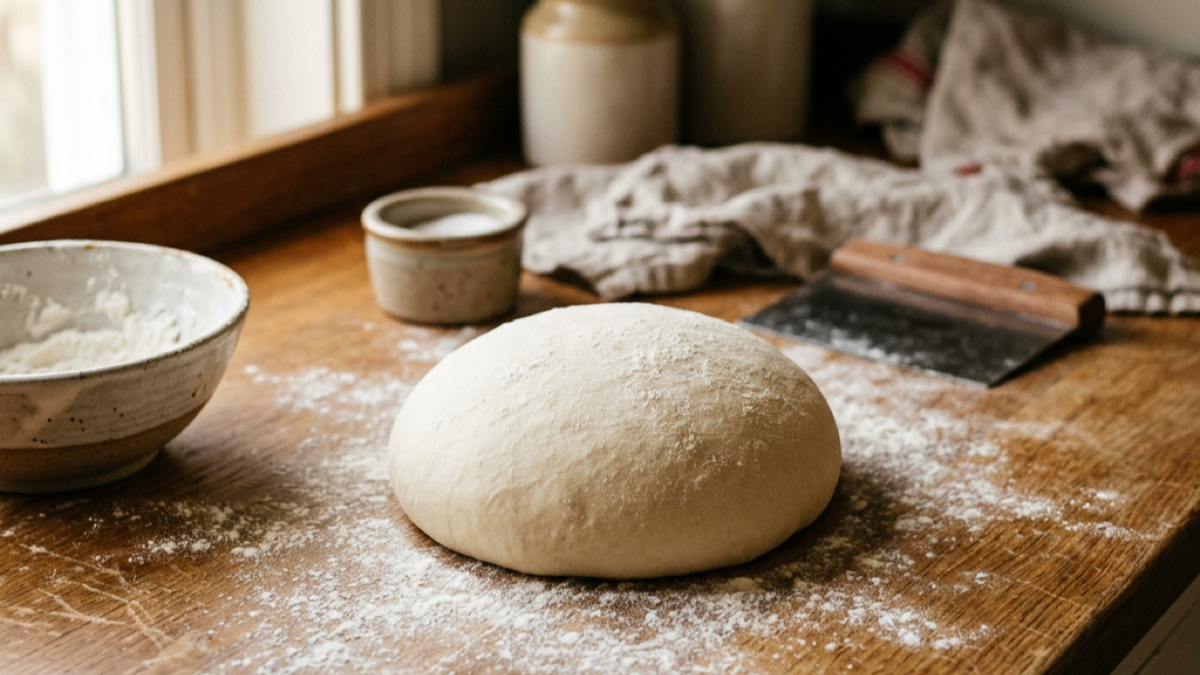
The windowpane test: pinch off a walnut-sized piece of dough. Gently stretch it between your fingers, turning slowly. If it forms a thin, translucent sheet you can see light through without tearing, it's done. If it rips, keep kneading in 2-minute increments and test again.
Other cues: surface goes from shaggy to smooth and slightly shiny; dough pulls cleanly off the bowl; when you poke it, it springs back slowly. You'll also hear a steady "thwop thwop thwop" slapping sound, different from the wet sloshing of under-kneaded dough.

Hauswirt M5 Max 6QT Stand Mixer for Effortless Home Baking
500W DC Motor | 6QT Bowl | 45dB Quiet | 4.5" Touchscreen
Why Dough Climbs the Hook (and How to Fix It)
Halfway through kneading, dough wraps around the hook and rides to the top — and just sits there, doing nothing. This is the single most common stand mixer frustration.
| Cause | Fix |
|---|---|
| Dough too dry | Add water 1 tbsp at a time until tacky but not wet |
| J-hook shape | Switch to spiral, or stop every 2 min and push dough down |
| Too much dough | Keep batches under 1,000g flour (2 loaves) for a 5-qt mixer |
| Speed too high | Drop to speed 2; dough should tumble, not spin |
If it climbs once, stop, pull it off, drop it back, continue. If it climbs repeatedly, fix the cause — usually hydration.
Signs Your Mixer Is Struggling
Some noise is normal. But certain signs mean you're asking too much, and ignoring them shortens the motor's life.
| Sign | What to Do |
|---|---|
| Head bobs or jumps | Halve the batch or add hydration |
| Mixer "walks" on counter | Stop immediately — reduce batch or speed |
| Speed drops under load | Drop to speed 1, or split the batch |
| Burning smell or hot housing | Stop, let cool 20 min, reduce batch next time |
Traditional AC-motor mixers (most KitchenAid tilt-heads) bog down under heavy dough loads. Newer DC-motor mixers like the Hauswirt M5max maintain torque under load much better. If your mixer walks on the counter every time you make bread, that's a motor problem — the Hauswirt stand mixer collection covers DC-motor options built for heavy doughs.
Dough Hook Substitute: What to Do Without One
Hand kneading (best): identical bread in 10-15 minutes by hand to equal 5 minutes with a hook.
No-knead (overnight): for lean breads only. Mix until it just comes together, cover, refrigerate 12-18 hours. Slow fermentation develops gluten without kneading. Works for rustic loaves and pizza; not for enriched doughs.
Food processor (small batches): with the plastic blade, kneads in 60-90 seconds. Keep batches under 500g flour and pulse, don't run continuously.
What does NOT work: the paddle. It will mash your dough into a paste.
Related Reading
This article is part of our Stand Mixer Attachments Guide — what every attachment in your box actually does, and which ones are worth buying.
Frequently Asked Questions
Can I knead dough in a stand mixer instead of by hand?
Yes — that's the whole point of the dough hook. Stand-mixer kneading produces identical bread in less time. Hand kneading only wins for very small batches (under 300g flour, where the hook can't grip) and very wet doughs above 80% hydration.
Why does KitchenAid say "speed 2 only" with the dough hook?
AC motors in traditional KitchenAids lose torque at higher speeds. Speed 2 is fast enough to knead, slow enough to keep torque. Going faster doesn't develop gluten any quicker; it just overheats the motor. DC-motor mixers don't have the same constraint, but low speed is still right for gluten development.
How do I know when dough is kneaded enough?
Use the windowpane test. Pinch off a walnut-sized piece and stretch it gently between your fingers. If it forms a thin translucent sheet you can see light through without tearing, gluten is developed. If it rips, knead another 2 minutes and test again.
Why does my dough climb up the hook?
Usually the dough is too dry, the batch is too large, or you're using a J-hook instead of a spiral. Add water 1 tablespoon at a time until the dough is tacky but not wet, keep batches under 1,000g flour for a 5-quart mixer, and consider switching to a spiral hook.
Can you over-knead dough in a stand mixer?
Yes, but it's hard at speed 2. Over-kneaded dough becomes shiny, sticky, and tears easily instead of stretching, and bakes into dense flat bread. At speed 2 you have a comfortable 2-3 minute window between "just done" and "overworked." Stop the moment the windowpane test passes.
What's the difference between a dough hook and a paddle?
The paddle is a broad flat blade for cookie dough, cake batter, mashed potatoes — anything that doesn't need gluten. The dough hook stretches and folds dough to develop gluten, for yeast breads, pizza, pasta. Paddle on bread dough = sticky paste; hook on cookie dough = tough cookies.
The Bottom Line
Use the hook for anything with yeast, run it at speed 2, knead 5-8 minutes on standard doughs, and stop when the dough passes the windowpane test. The rest — J-hook vs spiral, dough climbing the hook, motor-strain signs — comes with a few batches of bread.
Ready to put the hook to work? Start with our complete bread dough guide for a no-fail beginner loaf, or browse the stand mixer attachments overview to see what each attachment in your box actually does.
Sources
- KitchenAid Product Help — Making Bread Dough in a Stand Mixer (speed 2 ceiling and kneading technique).
- King Arthur Baking — How to Knead Bread Dough (windowpane test, hand-vs-mixer equivalence).
- Reddit r/Breadit community threads on kneading time and speed (consensus on 5-8 min standard, 10-12 min enriched).
- America's Test Kitchen — Bread Illustrated (gluten development science and visual cues).

