


Key Takeaways
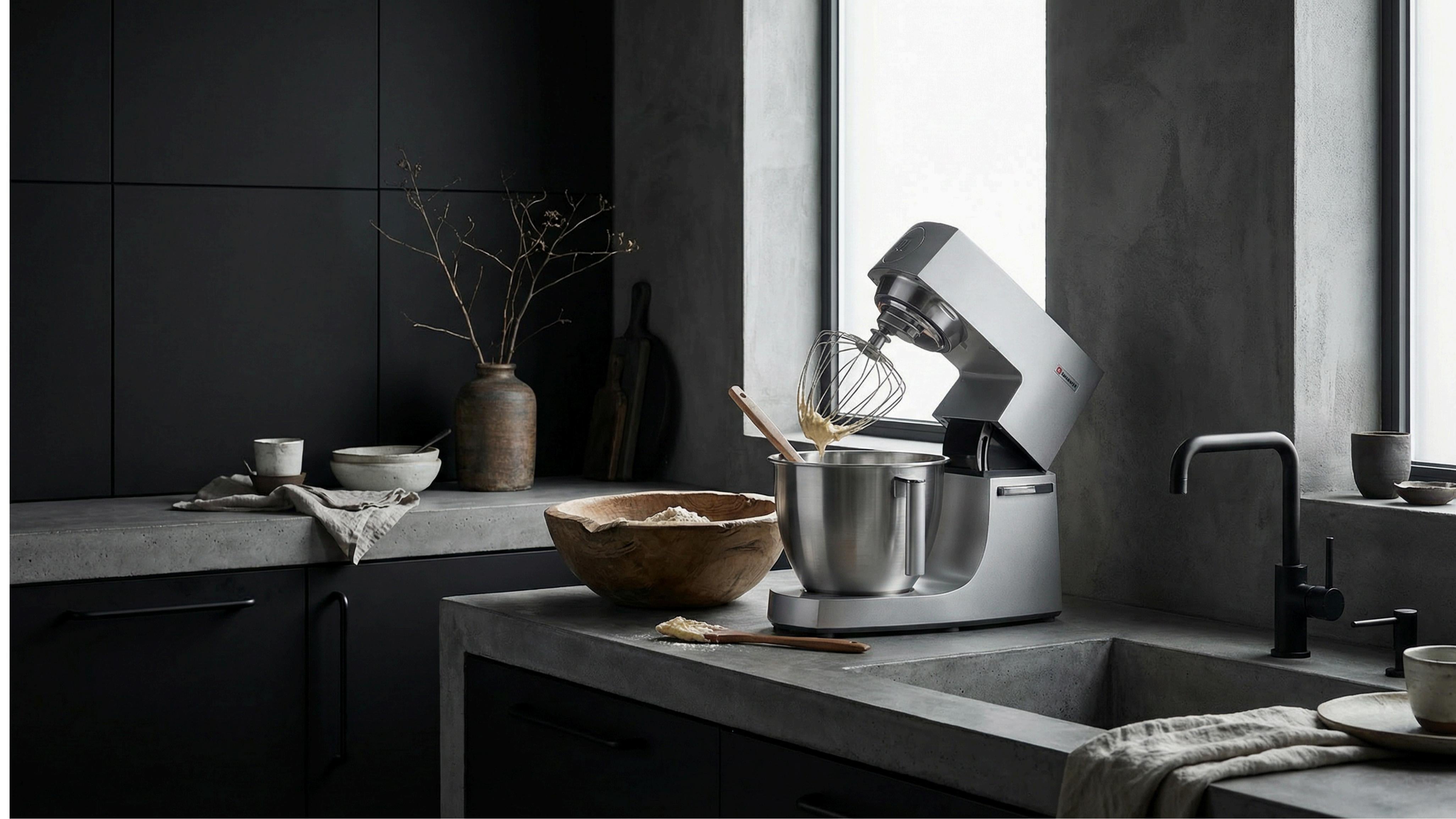
- A stand mixer can do far more than mix cake batter — it kneads bread dough, whips cream and egg whites, shreds chicken in 30 seconds, and with attachments becomes a pasta maker, meat grinder, and ice cream machine.
- The three included attachments (dough hook, flat beater, wire whisk) cover roughly 85% of what home bakers actually make. Most people never need more than these three.
- Speed control matters more than most buyers realize — speed 1-2 for kneading and folding, speed 4-6 for creaming and beating, speed 8-10 for whipping. Using the wrong speed is the #1 mistake new stand mixer owners make.
- Attachment-based uses (pasta, ground meat, ice cream, spiralizing) turn a stand mixer into a multi-purpose kitchen appliance that replaces 3-4 single-use gadgets and saves cabinet space.
- The Hauswirt M5max's DC motor and 11-speed presets make it particularly good at the full range of stand mixer tasks — low-speed torque for dough, high-speed stability for whipping, and consistent power across all 11 speeds.
Most people buy a stand mixer for one thing: they're tired of kneading bread by hand, or they want to make cookies without their arm falling off. Fair enough. That's what stand mixers are for.
But a month in, sitting on the counter, the mixer starts asking a quiet question: what else can you do with me?
The answer is: more than you think. A stand mixer with the right attachments replaces a pasta machine, a meat grinder, an ice cream maker, a spiralizer, and a food processor — and even without attachments, it does things most owners never discover. This guide covers every practical use, organized by how likely you are to actually do it.
The Three Core Attachments: What They Do and When to Use Them
Every Hauswirt stand mixer comes with three attachments. These three cover the majority of what home bakers make. Understanding which one to use — and at what speed — is the difference between a mixer that earns its counter space and one that gathers dust.
Dough Hook: Bread, Pizza, Pasta Dough
The spiral-shaped hook is for yeasted doughs — bread, pizza, bagels, soft pretzels, cinnamon rolls. It mimics hand-kneading but does it faster and more consistently. Use speed 1-2 only. Running a dough hook at higher speeds overheats the motor on AC mixers and over-works the gluten.
On the Hauswirt M5max, the DC motor maintains full torque at these low speeds — the hook doesn't bog down on stiff doughs the way AC-powered mixers do. Practical limit: about 1.5 kg (3.3 lbs) of dough, enough for two standard loaves or four 12-inch pizzas.
What you can make: sandwich bread, artisan boules, bagels, pizza dough, focaccia, brioche, cinnamon roll dough, soft pretzels, English muffins, naan, pita, pasta dough (the stiff, egg-based kind for rolling).
Flat Beater: Cookies, Cakes, Frosting, Mashed Potatoes, Shredded Chicken
The flat beater (sometimes called the paddle) is the workhorse. It's for creaming, mixing, and combining — anything where you're blending ingredients together rather than developing gluten or incorporating air.
This is also the attachment for two uses most people don't discover: mashed potatoes and shredded chicken. Throw boiled potatoes in the bowl, run the flat beater at speed 4-6 for 30 seconds, and you get perfectly smooth mashed potatoes with zero hand-mashing. Throw cooked chicken breasts in, run at speed 2-4 for 30 seconds, and you get evenly shredded chicken for tacos, salads, and soups.
What you can make: cookie dough (all types), cake batter, brownie batter, muffin batter, buttercream frosting, cream cheese frosting, mashed potatoes, shredded chicken, meatloaf mix, crab cake mix, biscuit dough, scone dough, shortbread.
Wire Whisk: Whipped Cream, Meringue, Macarons, Mayonnaise
The wire whisk is for incorporating air — anything that needs volume. Egg whites, heavy cream, and anything that starts as a liquid and needs to become a foam. Use speed 8-11.
The stand mixer's real advantage over a hand whisk: it holds speed while you pour. For Swiss meringue buttercream or Italian meringue, you can slowly stream hot sugar syrup into whipping egg whites with one hand while the mixer maintains speed with zero fatigue. That's physically impossible with a hand mixer.
What you can make: whipped cream, meringue cookies, macarons, Swiss/Italian meringue buttercream, angel food cake, soufflé base, marshmallow fluff, homemade mayonnaise, hollandaise, aioli, chocolate mousse.
Attachment-Powered Uses: The Mixer as Multi-Tool
The power hub on top of the mixer (the hinged port behind the attachment socket) is a universal drive shaft. Attach something to it, and the mixer's motor powers it. This is where a stand mixer stops being just a mixer and becomes a multi-purpose kitchen engine.
Pasta Roller and Cutter
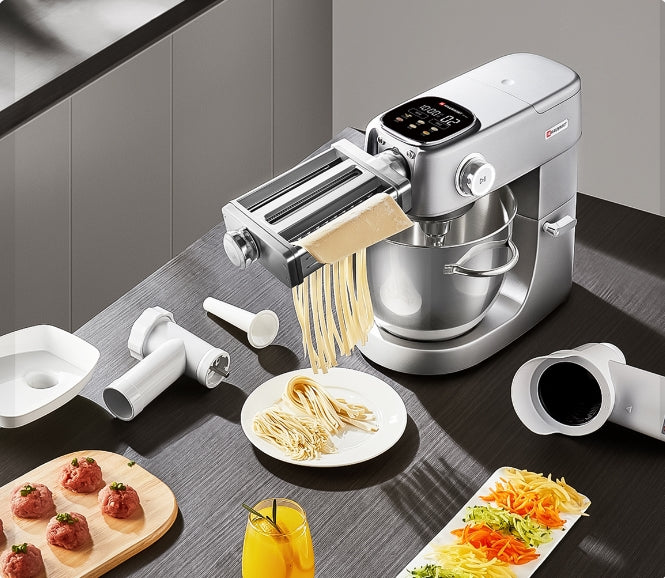
Fresh pasta from a stand mixer attachment is better than store-bought and faster than rolling by hand. The roller attachment sheets the dough to consistent thickness; the cutter attachment slices it into fettuccine, spaghetti, or lasagna sheets. The mixer's steady motor speed means uniform sheets with no thin spots.
Hauswirt's pasta roller set includes a roller, fettuccine cutter, and spaghetti cutter. The power hub drives them at the mixer's natural speed — no separate motor needed.
Meat Grinder
Grinding your own meat is the single biggest quality upgrade you can make for burgers, meatballs, sausage, and meat sauce. Pre-ground supermarket beef is a blend of dozens of cows, often from multiple countries. Home-ground meat from a single cut (chuck, short rib, brisket) is fresher, safer to eat medium-rare, and tastes noticeably better.
The Hauswirt meat grinder attachment fits the power hub and includes coarse and fine grinding plates. Feed chunks of chilled meat through the hopper and the mixer does the rest — no hand-cranking.
Ice Cream Maker (Freeze-Bowl Style)
Stand mixer ice cream attachments use a freeze-bowl — a double-walled bowl filled with coolant that you freeze for 12-24 hours before use. The mixer's dasher churns the ice cream base inside the frozen bowl, scraping the sides as it freezes. It's the same mechanism as a dedicated $50-80 ice cream machine, but powered by a motor you already own.
Other Attachment Possibilities
The standardized power hub on Hauswirt mixers works with many universal-fit attachments. Depending on what's available for your model:
| Attachment | What It Makes | Worth It For |
|---|---|---|
| Pasta roller & cutter set | Fresh fettuccine, spaghetti, lasagna sheets, ravioli | Anyone who likes fresh pasta — it's noticeably better than dried |
| Meat grinder | Ground beef, pork, chicken; custom sausage blends | Burger enthusiasts, sausage makers, anyone who wants better-quality ground meat |
| Ice cream maker | Ice cream, gelato, sorbet, frozen yogurt | Ice cream lovers — pays for itself vs $6/pint premium ice cream |
| Citrus juicer | Fresh orange, lemon, lime, grapefruit juice | Cocktail makers, breakfast routines, large-batch juicing |
| Food grinder / mill | Fresh flour from wheat berries, bread crumbs, ground nuts | Serious bread bakers — fresh-milled flour has more flavor and nutrients |
Speed Guide: Which Speed for Which Task
The biggest mistake new stand mixer owners make: running everything at medium speed. Different tasks need different speeds, and using the wrong one either under-works your ingredients or over-works them. Here's the quick reference:
| Speed | Use For | Why |
|---|---|---|
| 1-2 (Low) | Kneading dough, folding in add-ins, starting any mix (to avoid flour cloud) | Dough needs slow, steady gluten development; high speed tears gluten and overheats the motor |
| 3-4 (Medium-Low) | Combining dry + wet ingredients, mixing cookie dough, creaming butter and sugar (start) | Gentle incorporation before adding speed; prevents ingredient splatter |
| 5-6 (Medium) | Creaming butter and sugar (finish), mixing cake batter, mashing potatoes, shredding chicken | Proper aeration for creaming; enough force to break down cooked potatoes/chicken |
| 7-8 (Medium-High) | Beating eggs, mixing dense batters, whipping cream (start) | Structural incorporation; starting the aeration process for cream |
| 9-10 (High) | Whipping egg whites, finishing whipped cream, meringue | Maximum air incorporation; egg whites need high speed for stiff peaks |
| 11 / Pulse | Short bursts for precise control, final mix checks | Pulse prevents over-mixing at the finish line |
The Hauswirt M5max has 5 preset programs that auto-set the speed and time for common tasks — bread dough, cake batter, egg whites, cream, and a custom program. If you're new to stand mixers, the presets take the guesswork out of speed selection.
Uses by Category: The Complete List
Here's everything a stand mixer can practically do, organized by how often you'll actually use it.
Daily and Weekly Uses (What Your Mixer Will Actually Do)
- Bread dough — The #1 reason people buy a stand mixer. Kneads in 5-8 minutes vs 12-15 by hand.
- Pizza dough — Same as bread, different hydration. A DC motor mixer handles stiff 58-62% hydration Neapolitan dough without straining.
- Cookie dough — Cream butter and sugar, add dry ingredients, fold in chips. Five minutes from start to scooping.
- Cake batter — The flat beater creams butter and sugar more evenly than a hand mixer, and you can add eggs one at a time with the mixer running.
- Whipped cream — Cold heavy cream, speed 8-10, 2-3 minutes. Fresh whipped cream beats anything from a can.
- Buttercream frosting — The wire whisk whips butter and sugar into a smooth, spreadable frosting in 5 minutes.
- Mashed potatoes — Boiled potatoes + flat beater + 30 seconds = perfectly smooth. Add butter and warm milk while mixing.
- Shredded chicken — Cooked boneless chicken breasts + flat beater + speed 2-4, 30 seconds. Faster and more consistent than two forks.
Weekend and Project Uses
- Fresh pasta — Make the dough in the mixer, roll and cut with the pasta attachment. Egg pasta dough (the stiff kind) is where the DC motor's low-speed torque shines.
- Ground meat — Chuck, short rib, brisket through the meat grinder. Custom burger blends that supermarket ground beef can't match.
- Ice cream — Vanilla custard base mixed and chilled, then churned in the freeze-bowl attachment. Fresher and more customizable than premium pints.
- Swiss meringue buttercream — Egg whites and sugar heated over a water bath, then whipped in the mixer while you stream in butter. A stand mixer makes this possible; a hand mixer makes it a workout.
- Brioche and enriched doughs — High-butter doughs that would be impossible to knead by hand (the butter melts from hand heat). The mixer keeps everything cool and emulsified.
Things Most Owners Don't Know Their Mixer Can Do
- Mayonnaise — Egg yolks + oil + acid, wire whisk, speed 8. Slowly drizzle oil while the mixer runs. Homemade mayo in 3 minutes.
- Hollandaise sauce — Same principle as mayo but with warm clarified butter. The mixer holds the emulsion better than whisking by hand.
- Marshmallow fluff — Hot sugar syrup streamed into whipping egg whites. The mixer's steady speed means uniform texture.
- Whipped honey / whipped butter — Honey or butter whipped at high speed with the wire whisk turns light, spreadable, and almost creamy.
- Fresh breadcrumbs — Stale bread in the bowl, flat beater on medium speed, 30 seconds. Better than boxed, exactly the texture you want.
- Mix meatloaf or meatball mix — Flat beater combines meat, breadcrumbs, egg, and seasonings without over-working the meat (which makes it tough).
What a Stand Mixer Won't Do Well (Save Your Money on Attachments)
Some attachments sound great on paper but collect dust in practice:
- Spiralizer attachment — A $15 handheld spiralizer does the same job with less setup and cleanup. The stand mixer version isn't faster enough to justify the price.
- Grain mill attachment — Fresh-milled flour is genuinely better, but a dedicated countertop grain mill (like the Mockmill) mills finer and faster. The attachment is a compromise.
- Food processor attachment — A standalone food processor costs about the same and does a better job. The attachment is underpowered and the bowl is small.
- Pouring shield — You can achieve the same thing with a kitchen towel draped over the bowl. Save the $20-30.
Frequently Asked Questions
What's the first thing I should make with a new stand mixer?
Chocolate chip cookies. They use the flat beater, teach you the creaming method (butter + sugar, then eggs, then dry), and give you an immediate win. Bread dough is the second thing — it's why you bought the mixer, and the dough hook doing the work while you watch is deeply satisfying.
Can a stand mixer replace a hand mixer?
For almost everything, yes — and it does a better job. The stand mixer's motor is more powerful, the bowl rotates automatically (planetary mixing), and you have both hands free. The only time a hand mixer wins is for very small batches (one egg white, a half cup of cream) where the stand mixer bowl is too large to engage the ingredients properly.
What speed should I use for bread dough?
Speed 2, always. Never higher. Bread dough needs slow, steady kneading to develop gluten without tearing it or overheating the dough. On an AC motor mixer, speed 2 can feel underpowered because AC motors lose torque at low speeds — that's the motor, not the speed. A DC motor mixer (like the Hauswirt M5max) maintains full torque at speed 2 and kneads more effectively without needing higher speeds.
How much dough can a 6-quart stand mixer handle?
About 1.5 kg (3.3 lbs) of bread dough — that's two standard loaves or four 12-inch pizzas. For cookie dough and cake batter, the practical limit is higher (the bowl can hold more) but the stated maximums exist for a reason: exceeding them strains the motor and produces uneven mixing.
Do I need all the attachments, or are the included three enough?
The included three (dough hook, flat beater, wire whisk) cover roughly 85% of what most home bakers make. Start with those. If you find yourself wishing for fresh pasta weekly or grinding meat for burgers, add attachments one at a time. Most people who buy a bundle of attachments upfront use two of them and never touch the rest.
Why does my stand mixer walk across the counter when kneading dough?
This is almost always an AC motor issue. AC motors lose torque at low speeds, so the motor strains and vibrates under load, causing the mixer to shimmy. A heavier base (like KitchenAid's 26-pound Artisan) partially compensates with weight. DC motor mixers like the Hauswirt M5max don't have this problem — the motor maintains consistent torque at low speeds and the side-mounted motor placement keeps the center of gravity low, so the mixer stays planted without needing to weigh 26 pounds.
Can I leave the mixer running unattended?
For most tasks, no — you should be nearby to monitor consistency, scrape the bowl, and add ingredients. The exception is long kneading cycles (5-8 minutes of bread dough at speed 2), where the mixer is doing steady, predictable work and you can step away briefly. The M5max's built-in timer helps here: set it for 8 minutes and the mixer stops automatically.
What to Do Next
If you already own a Hauswirt stand mixer, pick one thing from the "Most Owners Don't Know" list above and try it this week. Shredded chicken in 30 seconds will make you look at your mixer differently.
If you're still deciding, the Hauswirt M5max with its DC motor, 11 speeds, 5 preset programs, and built-in timer handles every use on this page — from stiff bread dough at speed 2 to whipped cream at speed 10. See the full specs and current pricing below.
For more specific guides, read how to make bread dough in a stand mixer or browse our complete attachments guide.
Sources
- Hauswirt M5max product documentation — speed settings, motor specifications, and attachment compatibility
- "What Does a Stand Mixer Do?" — KitchenAid official usage guide
- User experiences aggregated from r/Baking, r/Breadit, r/Cooking, r/StandMixer — common questions and use cases
- Stand mixer attachment reviews and comparisons — multiple sources evaluating real-world utility of each attachment type
